The moment you realize you can edit a photo just by describing it, something shifts. You stop thinking like an editor and start thinking like a director. Instead of asking “which tool should I use?”, your mind asks “what should this image feel like?” That quiet change is what makes an AI photo editing app with prompt so different—it transforms editing into a language-driven experience where imagination leads and the software follows.
Rethinking Photo Editing in the Age of AI
Photo editing used to be a layered process. Every change required a decision, and every decision required knowledge. AI has rewritten that structure. Now, editing can begin with a single instruction written in plain language. The system interprets that instruction and performs multiple adjustments simultaneously, often producing results that feel cohesive and refined. This approach doesn’t just simplify editing; it reshapes how users interact with visuals. The emphasis is no longer on tools, but on ideas.
The Quiet Intelligence Behind Prompt Editing
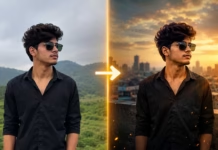
What makes prompt-based editing powerful is not just automation—it’s interpretation. The AI does not blindly follow instructions; it understands context. When you describe a mood or lighting condition, the system connects that description to patterns it has learned from countless images. This allows it to make decisions that feel intentional. It adjusts shadows, tones, and textures in a way that aligns with the user’s description, often producing results that would take multiple steps in traditional editing.
Writing as a Creative Skill in Visual Design
In this new editing style, writing becomes a creative tool. The way a prompt is structured directly influences the final image. A short, vague instruction may lead to a basic result, while a detailed description can produce something far more polished. Users begin to experiment with wording, learning how different phrases affect the output. Over time, they develop a personal style—not through filters or presets, but through the way they describe their ideas.
The Speed Advantage of Prompt-Based Editing
One of the most noticeable benefits of AI editing apps is speed. Tasks that once required time and precision can now be completed in seconds. This speed is not just convenient; it changes how people create. Instead of spending time perfecting a single image, users can generate multiple variations quickly. This encourages exploration and allows for more creative output without increasing effort.
A More Inclusive Approach to Creativity
Prompt-based editing has made photo editing more accessible than ever. People who previously avoided editing tools due to complexity can now participate with ease. There is no steep learning curve, no need to understand technical terms. At the same time, experienced creators can use these apps to enhance their workflow. They can generate a base edit using a prompt and then refine it further if needed. This combination of simplicity and flexibility makes the technology appealing to a wide range of users.
Popular Apps Shaping This Experience
Several apps have embraced this new way of editing, each offering its own interpretation of prompt-based features.
Remini is widely known for improving image clarity and restoring details, especially in portraits. Its AI-driven enhancements make it a reliable choice for refining photos quickly.
Lensa focuses on stylized transformations. It is particularly effective for users who want artistic edits with a strong visual identity.
PicsArt provides a mix of AI tools and manual editing options, giving users the freedom to combine automation with personal adjustments.
Adobe Photoshop Express brings AI features into a familiar editing environment, allowing users to achieve professional results with less effort.
Each of these apps contributes to a growing ecosystem where prompt-based editing is becoming a standard feature rather than a novelty.
The Role of Imagination in Modern Editing
With technical barriers removed, imagination becomes the most important factor. The quality of the result depends less on skill and more on vision. Users who can clearly describe what they want tend to achieve better outcomes.
This shift encourages a more creative mindset. Editing becomes an extension of imagination rather than a test of technical ability.
Exploring Different Visual Styles Through Prompts
Prompt-based editing makes it easy to explore different aesthetics. A single photo can be transformed into multiple styles simply by changing the description. This allows users to experiment without committing to a single look.
Whether aiming for a soft, natural appearance or a bold, dramatic tone, users can achieve diverse results quickly. This flexibility makes the editing process more dynamic and engaging.
The Subtle Art of Refinement
Even though AI handles most of the work, refinement still plays a role. Users often adjust their prompts to achieve more precise results. This process of refinement is similar to fine-tuning, but it happens through language rather than controls.
It becomes a conversation between the user and the AI, where each prompt brings the image closer to the desired outcome.
When AI Surprises You
One interesting aspect of prompt-based editing is unpredictability. Sometimes the result may differ slightly from what was expected. While this can be challenging, it also introduces an element of surprise.
These unexpected results often lead to new ideas, pushing users to explore directions they might not have considered otherwise.
Practical Use of Detailed Prompts
A well-crafted prompt can guide the AI with remarkable precision. When a prompt includes details about lighting, composition, and styling, the result tends to be more refined and visually appealing.
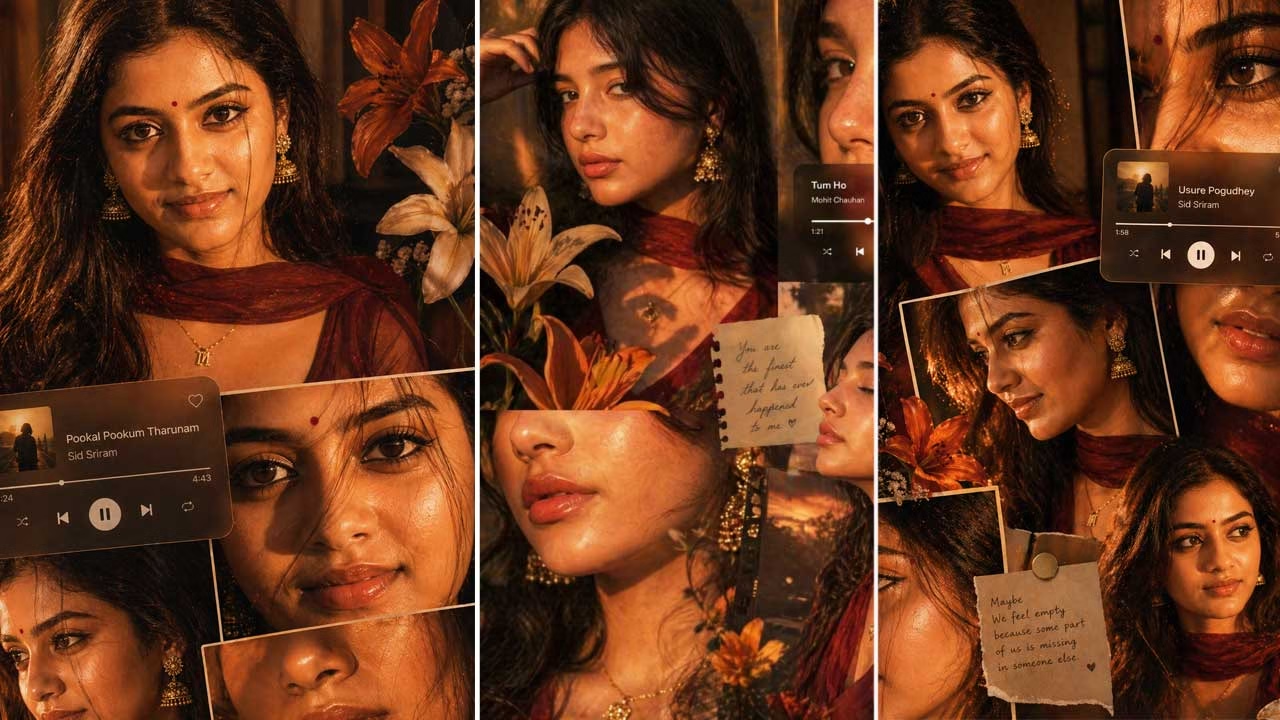
For example, a detailed cinematic collage prompt—like the one you plan to include—acts as a complete instruction set. It tells the AI how to structure the image, how to light it, and how to style the subject. This level of detail allows users to achieve complex edits in a single step, making the process both efficient and powerful.
The Expanding Influence of AI in Visual Creation
AI is no longer just assisting in editing—it is actively shaping how images are created. Prompt-based apps represent a shift toward more intuitive tools that prioritize user intent over technical process.
As these tools continue to evolve, they will likely become even more integrated into everyday content creation, influencing how people design, share, and experience visuals.
Try This Cinematic Prompt for Stunning Results
Now that you understand how detailed prompts work, you can directly use a professionally structured prompt to create a cinematic-style image. Simply upload your photo in any AI editing app and paste the prompt below.
This prompt is designed to give you a complete cinematic collage output with rich lighting, strong mood, and detailed composition in a single step.
Download Prompt
A Different Way to See Images
AI photo editing apps with prompt encourage users to think differently about images. Instead of focusing on adjustments, they focus on ideas. This change in perspective makes editing feel less like a task and more like an act of creation.
In this environment, the most valuable skill is the ability to imagine and describe. The clearer the vision, the stronger the result. And with that, photo editing becomes something anyone can do—not by learning tools, but by learning how to express what they see in their mind.