Over the last few months, a very specific AI image style has quietly taken over Instagram Reels, YouTube Shorts thumbnails, WhatsApp status edits, and even local poster design pages. It blends South Indian cultural styling with polished digital photography aesthetics, creating visuals that feel halfway between a movie announcement poster and a personal celebration photo. What makes this trend interesting is that people are not engaging with it only because it looks beautiful. They engage because it feels familiar while still looking elevated beyond everyday photography.
There is also a strong regional identity attached to this style. The sarees, temple jewelry, jasmine flowers, thundu towels, Tamil typography, and village-inspired color palettes create an immediate emotional connection for Tamil audiences. But the appeal goes beyond culture alone. These images package traditional styling using modern visual language. That combination works extremely well online because viewers feel both nostalgia and freshness at the same time.
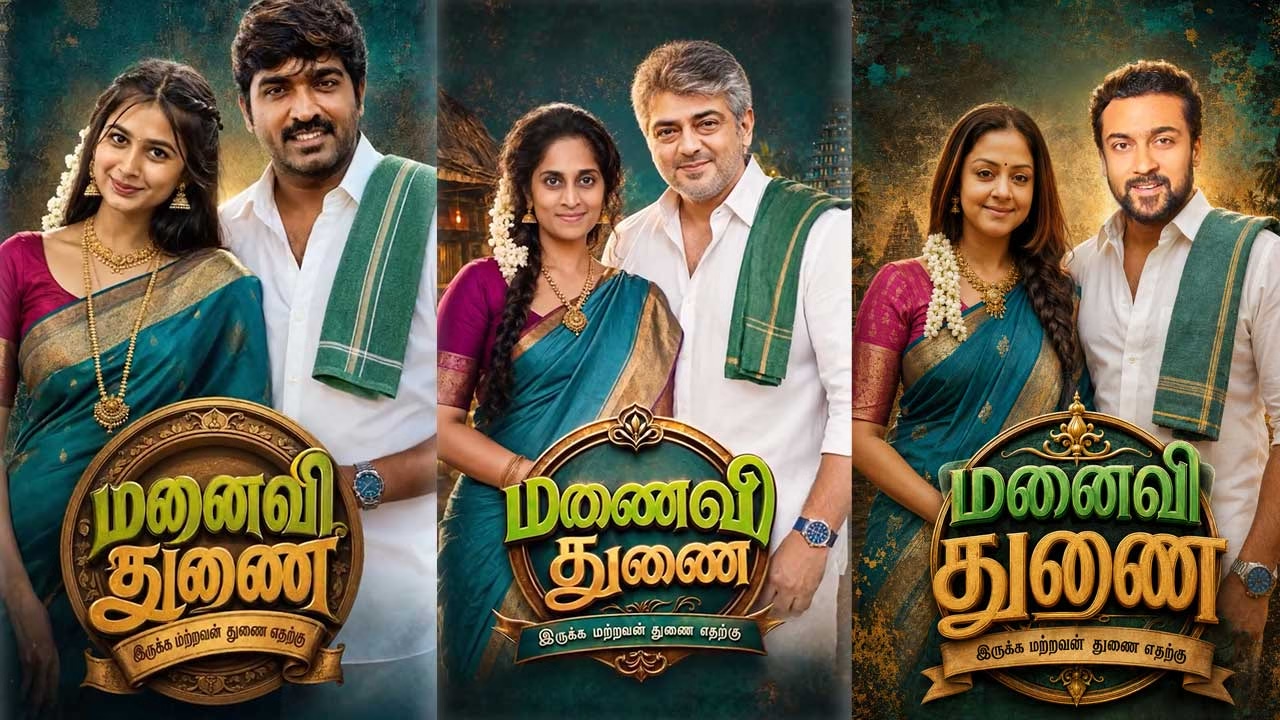
One reason these images perform strongly on social media is their poster-like framing. Most creators are generating them in vertical 9:16 format, which naturally fits mobile screens. Unlike wide cinematic wallpapers that lose detail on phones, these compositions keep the faces, jewelry, typography, and clothing close to the viewer. Even when someone scrolls quickly, the image remains readable within seconds. The bold center framing also helps thumbnails stand out among crowded feeds.
Color choice plays a bigger role than many people realize. Deep teal backgrounds mixed with warm gold accents create a rich contrast that instantly catches the eye without becoming visually noisy. Many viral AI edits fail because they overload scenes with too many bright colors at once. This particular aesthetic usually limits itself to two or three dominant tones, which gives the image a cleaner and more controlled appearance. Gold jewelry against darker backgrounds especially creates strong visual separation on small mobile displays.
Another interesting part of this trend is the styling balance between tradition and aspirational fashion. The woman is often presented with classic village-inspired elements like jasmine flowers and silk sarees, while the man carries a slightly modernized appearance through hairstyle choices, watches, beard styling, or crisp shirts. That mix reflects how many younger audiences currently see themselves culturally. They appreciate traditional identity, but they still want polished modern presentation. AI creators have noticed this balance performs far better than fully old-fashioned styling or completely urban fashion-heavy edits.
People also respond strongly to facial clarity in these posters. Many AI-generated images become popular only when viewers can instantly recognize expressions and identity consistency. The newer generation of AI tools has become much better at maintaining facial symmetry, skin texture, and eye detail, especially in close portrait compositions. When viewers see faces that feel believable, they tend to spend more time looking at the image. Even a small increase in watch time or pause time can improve social media reach dramatically.
Why This Style Feels Shareable
These posters are designed almost like digital identity pieces. People use them as profile pictures, anniversary edits, engagement announcements, fan posters, and couple edits because they combine personal emotion with stylized presentation. A regular photograph may feel too casual, while a fully artificial fantasy image feels disconnected from reality. This style sits comfortably in the middle.
There is also a community effect happening around these edits. Once a certain visual style starts trending on Instagram and TikTok, more creators attempt their own versions. That repetition creates recognition. Audiences begin associating the aesthetic with quality edits, romantic storytelling, or “main character” presentation. Eventually the style becomes a visual language on its own.
The Influence of South Indian Movie Poster Design
A major reason these AI-generated visuals work so well is because they borrow heavily from regional movie poster culture. South Indian posters traditionally emphasize strong face lighting, bold typography, high-contrast colors, and centered compositions. AI creators are now adapting those visual rules into personal edits.
The typography itself contributes heavily to engagement. Tamil text rendered in metallic green and gold gives the design authenticity. Many viewers stop scrolling simply because the lettering feels handcrafted and dramatic. Text inside the frame also creates a poster-like identity rather than making the image look like a random portrait.
AI Tools Are Changing Local Creator Culture
Before AI image tools became accessible, creating posters like this required Photoshop knowledge, stock assets, lighting overlays, skin retouching, and typography experience. Now, many creators are producing similar visuals from a single detailed prompt. That accessibility has expanded regional digital art culture in a huge way.
Interestingly, different AI tools produce different moods even with similar prompts. Midjourney often exaggerates color grading and texture detail, while Flux-based models usually preserve facial realism better. Stable Diffusion workflows allow deeper control over identity consistency and local styling details. Experienced creators usually test multiple tools because each engine interprets fabric textures, jewelry reflections, and skin differently.
The Appeal of Hyper-Detailed Textures
Viewers are naturally drawn toward detail-rich imagery on high-resolution mobile screens. Silk saree textures, gold chain reflections, jasmine flower strands, beard sharpness, and fabric folds create visual density that encourages longer viewing. Even if someone does not consciously analyze these details, the brain notices texture complexity immediately.
This is also why shallow depth-of-field works so well in these edits. Softly blurred backgrounds keep attention locked on faces and clothing details. The viewer knows exactly where to look. Good AI creators understand this instinctively now. They are no longer generating busy backgrounds because cleaner focus tends to perform better online.
Why Audiences Keep Returning to This Aesthetic
The biggest strength of this visual trend is that it feels personal despite being AI-generated. The images look polished enough to resemble promotional artwork, but still relatable enough to represent ordinary people. That balance is difficult to achieve. Many viral aesthetics disappear quickly because they feel too artificial or overly stylized. This one survives because viewers can imagine themselves inside the frame.
There is also something visually comforting about the combination of village-inspired styling, rich colors, soft lighting, and symmetrical framing. The images feel composed and intentional. In fast-moving social media environments filled with cluttered visuals, that kind of clarity stands out immediately.
Original Prompt
A professional South Indian movie poster featuring a traditional village couple standing side-by-side with authentic 100% identical facial features. The woman on the left is wearing a teal-blue silk saree with a gold zari border, a magenta blouse, a gold temple necklace, and fresh jasmine flowers in her braided hair. The man on the right has a modern hairstyle with light brown highlights, a trimmed beard, a smiling expression, and is wearing a crisp white formal shirt with a traditional green towel (thundu) draped over his left shoulder and a prominent blue-dial watch on his wrist. In the center, a 3D circular emblem contains the bold Tamil text “மனைவி துணை” in vibrant green and gold typography, with a smaller banner below reading “இருக்க மற்றவன் துணை எதற்கு”. The entire scene is set against an artistic, deep teal and gold textured grunge background with dramatic cinematic rim lighting, high contrast, ultra-realistic skin textures, shot on a Canon EOS R5 with an 85mm prime lens, shallow depth of field, hyper-detailed, 16K resolution. –ar 9:16
Final Thoughts
This AI image style became popular because it understands modern internet behavior surprisingly well. It combines recognizable culture, polished visual presentation, mobile-friendly composition, and social identity into a single frame. The result is an aesthetic that feels both shareable and personal, which is exactly the kind of content that thrives on today’s social platforms.