One thing that becomes obvious after testing hundreds of AI image prompts is that emotional scenes are surprisingly fragile. A small wording change can completely alter facial quality, lighting balance, or body positioning. Sometimes a prompt that looks detailed on paper produces a flat, artificial image, while a shorter version suddenly feels far more believable.
That usually happens because AI image models respond better to visual clarity than emotional overload. The generator needs to understand where attention belongs first. If every line tries to push atmosphere, sadness, glow effects, dramatic grading, and texture detail simultaneously, the model starts blending everything together in unpredictable ways. The strongest results often come from prompts that quietly guide the image instead of aggressively forcing it.
Start With Physical Placement Instead Of Mood
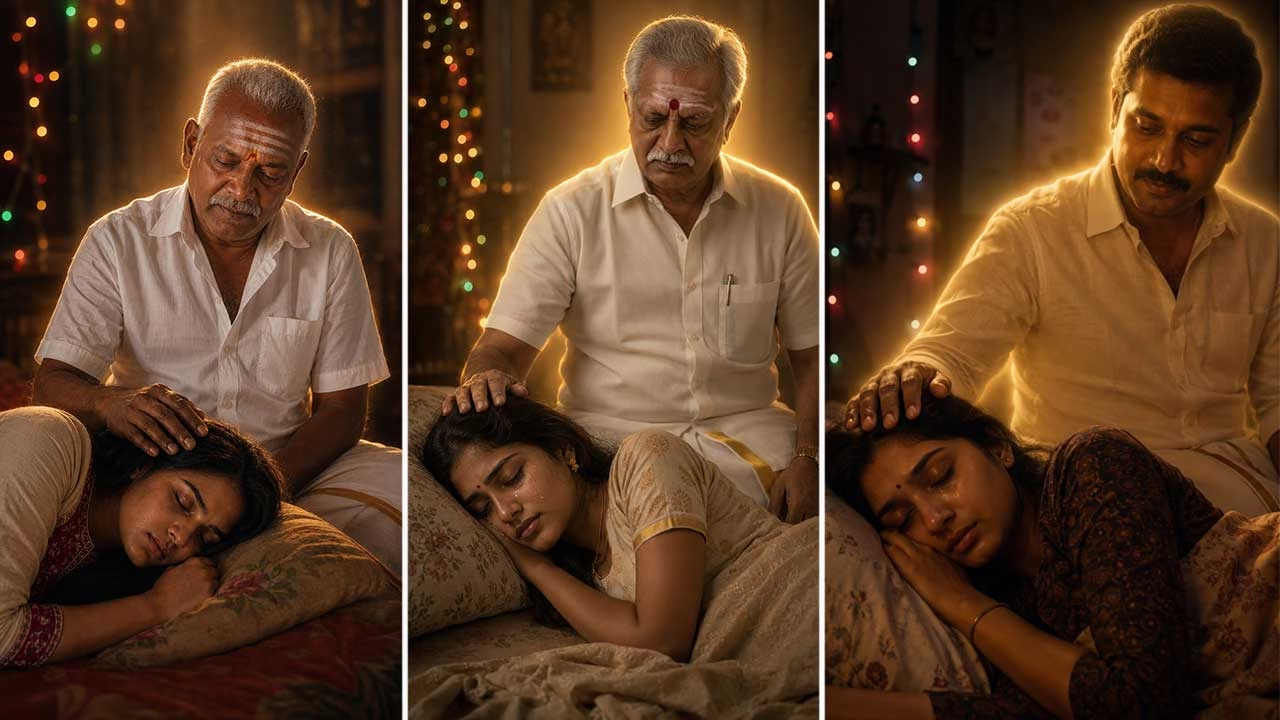
Many people begin prompts with emotional descriptions, but subject placement is usually more important than mood during the early stages of generation. In this scene, the important visual foundation is simple. A woman is sleeping naturally on a bed while a glowing man sits beside her and gently places his hand on her head. That interaction already creates emotional weight without needing exaggerated storytelling language.
I noticed that when prompts describe actions clearly, anatomy becomes more stable almost immediately. AI models seem to understand physical interaction more reliably than abstract emotional phrases. For example, “resting naturally on a pillow” often produces cleaner posture than dramatic descriptions focused entirely on sadness or grief.
Lighting Quality Matters More Than Extra Detail
A lot of AI-generated portraits fail because the lighting behaves unnaturally. Faces become overexposed, shadows turn muddy, or skin loses texture completely. Warm low-intensity lighting works especially well for indoor emotional scenes because it softens transitions between highlights and shadows. That softness helps preserve facial detail while preventing the image from looking overly sharpened.
The background fairy lights also serve an important purpose beyond decoration. They create subtle visual separation inside the frame. Without that separation, darker scenes can look compressed and visually empty. Interestingly, some models handle glowing effects beautifully until the aura becomes too large. Once the glow spreads aggressively across the frame, nearby skin texture often disappears first. Keeping the aura subtle usually creates a much cleaner final render.
Why Simpler Faces Often Look Better
One of the easiest ways to break realism is by over-describing faces. Extremely detailed beauty descriptions often confuse the rendering process, especially in emotional scenes involving tears, shadows, and shallow focus.
Simple features tend to perform more consistently. Short hair, a mustache, natural expression, and realistic facial structure are usually enough.
AI systems often produce stronger portraits when they are allowed to interpret smaller details naturally instead of being forced into hyper-specific beauty instructions.
I also found that tear rendering improves when the prompt treats tears as a secondary detail instead of the emotional centerpiece. Once emotional wording dominates the face section, many generators begin exaggerating reflections and eye highlights unnaturally.
Composition Is Quietly Controlling Everything
Composition rarely gets enough attention in prompt writing, even though it heavily influences realism.
The vertical 9:16 framing works well here because it keeps both subjects visually connected without leaving excessive empty space on the sides. Wider framing often weakens emotional interaction because the eye begins drifting toward background elements instead of staying focused on the people.
Shallow depth of field also plays a major role. Soft background blur reduces distraction and gives the scene a more photographic appearance. It helps the subjects feel separated from the environment rather than digitally pasted into it.
Some creators try fixing realism problems with additional prompt detail when the actual issue is composition imbalance.
Different AI Models Prioritize Different Things
After testing the same prompt across multiple generators, it becomes clear that every model has different strengths.
Midjourney tends to produce dramatic atmosphere and rich color quickly, but emotional portraits can sometimes drift toward stylized rendering. Flux models generally preserve softer textures and smoother lighting transitions more naturally.
SDXL workflows provide stronger realism control when paired with carefully trained checkpoints, although they often require more prompt refinement. ChatGPT image generation models usually understand natural scene descriptions well, particularly when the interaction between subjects is physically clear.
Learning how a model interprets lighting and texture is often more valuable than endlessly rewriting prompts.
Negative Prompts Prevent Common Rendering Problems
Many visual defects appear because the model is not being told what to avoid.
Glow-heavy emotional scenes are especially vulnerable to distorted hands, duplicated fingers, warped eyes, plastic skin, and overexposed highlights. Negative prompts help reduce those issues before generation even begins.
Terms like “bad anatomy,” “extra fingers,” “distorted eyes,” “plastic skin,” “duplicate limbs,” and “overexposed glow” can noticeably improve consistency without making the prompt feel overloaded.
In most cases, cleaner generations come from controlled restraint rather than excessive description.
Prompt Used
Indian women sleeping peacefully on a bed. A glowing man sits besides her, gently placing his hand on her head with a caring expression. The man has a realistic face, short hair, and a mustache, wearing a light cream shirt and traditional veshti or lungi. Add a soft golden aura around his body to create a subtle heavenly appearance. The scene should have low warm lighting with colorful bokeh fairy lights in the background. The woman should have visible tears on her face, eyes closed naturally while resting on a pillow. Use soft shadows, fine skin detail, shallow depth of field, balanced dramatic color tones, and natural photographic composition. Image ratio 9:16.