A strong AI-generated poster is rarely created by accident. Behind every viral cinematic portrait is a prompt that quietly controls framing, atmosphere, facial emotion, and visual balance. The tribute poster prompt above works because it treats AI like a creative director instead of a simple image generator. Rather than requesting a random portrait, it builds a layered visual narrative where every section of the composition serves a purpose. That approach is exactly why professional creators are increasingly using advanced AI tools for high-impact poster art.
The Prompt Uses Composition Like a Film Scene
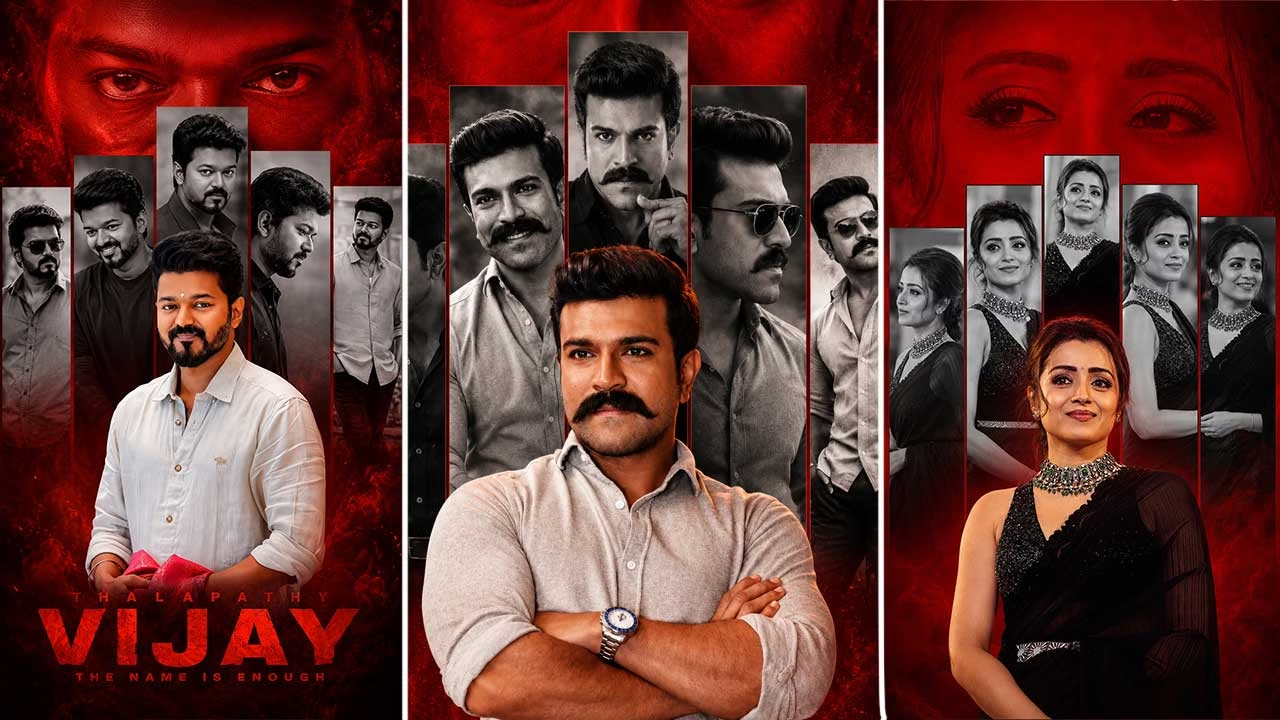
Most AI prompts focus only on appearance, but this one focuses on structure. The faded close-up eyes in the background immediately create tension before the viewer even notices the central subject. The five vertical portrait panels add motion to a static image by presenting different emotional versions of the same character. When the larger full-color foreground cutout is added on top, the composition suddenly gains depth similar to a movie teaser poster.
This style works especially well because AI models respond strongly to layered instructions. Instead of producing a flat portrait, the tool understands foreground, middle composition, and background atmosphere separately. That separation often leads to cleaner and more premium-looking outputs.
Runway AI Excels at Cinematic Mood Generation
Runway AI is becoming a favorite among creators who want images that resemble frames from high-budget trailers. Its image generation engine understands dramatic lighting extremely well, especially when prompts involve monochrome color palettes and emotional portrait setups. The red atmosphere described in the tribute poster prompt gains a soft cinematic glow when generated through Runway.
One standout advantage is the platform’s ability to preserve facial realism even in heavily stylized scenes. Many AI tools distort faces when multiple portraits are included in one frame, but Runway often maintains cleaner visual continuity across collage layouts. This makes it ideal for posters that rely on repeated versions of the same person.
Ideogram AI Understands Poster Layouts Better Than Expected
Ideogram AI is usually discussed for typography generation, but it also performs surprisingly well for poster composition. Since the tribute prompt uses vertical panel arrangements and layered cutouts, Ideogram interprets spacing and alignment more naturally than many other AI platforms.
What makes it useful for this kind of design is its handling of symmetry. The five portrait panels appear balanced without feeling mechanically duplicated. The AI introduces subtle posture variations that make the collage feel intentionally photographed rather than digitally repeated. That small detail creates a much more believable editorial style.
Krea AI Helps Refine Artistic Sharpness
Krea AI is often used by creators who want more control over realism and texture enhancement. After generating the initial tribute poster, Krea AI can sharpen facial details, improve lighting transitions, and enhance cinematic depth without changing the original composition too much.
This becomes important when working with monochrome backgrounds. Red-heavy scenes can sometimes flatten important facial features, especially in black-and-white portrait sections. Krea AI restores those details carefully while keeping the dramatic atmosphere intact. The final image ends up looking more like a professionally edited poster than an AI draft.
Why the Black-and-White Panels Matter
The grayscale portrait panels are not only stylistic elements. They help direct the viewer’s attention toward emotion instead of color. Each pose reveals a different personality angle, whether it is confidence, calmness, mystery, or attitude. When these monochrome panels sit behind a vibrant foreground cutout, the main subject automatically becomes dominant.
This contrast between muted and colorful sections creates visual hierarchy. Human eyes naturally move toward stronger saturation, so the foreground cutout gains immediate importance without needing extra effects. That is one reason cinematic poster designers often combine monochrome support imagery with one highlighted subject.
AI Tools Interpret Emotion Through Lighting
One overlooked aspect of AI image prompting is emotional lighting. The phrase “dramatic tribute poster” already signals the generator to avoid flat studio illumination. Instead, the AI begins adding stronger shadows, contrast, and directional highlights. These details affect the emotional tone more than facial expression alone.
Professional AI users often understand that mood words can reshape an entire composition. A single descriptive phrase like “intense,” “cinematic,” or “monochrome atmosphere” can completely alter the way the model handles shadows and depth. In this tribute poster prompt, the emotional language quietly guides the overall visual energy.
Stable Diffusion Gives More Creative Freedom
Stable Diffusion remains one of the strongest options for creators who want advanced customization. Unlike platforms focused on quick results, Stable Diffusion allows deeper experimentation with styles, facial consistency, and composition control. Users can adjust models, fine-tune details, and even train visual preferences around poster aesthetics.
For a tribute-style artwork, this flexibility matters because creators can repeatedly refine the same concept until the emotional balance feels right. Some users prefer sharper fashion-style outputs, while others want softer cinematic textures. Stable Diffusion gives room for both directions without forcing a fixed artistic identity.
Layered Prompting Produces More Realistic Posters
A major reason beginners struggle with AI-generated posters is that they describe subjects without describing visual relationships. This prompt succeeds because it explains how elements should interact. The background eyes blend into the red environment, the portrait panels stay centered, and the foreground cutout overlaps the collage naturally.
AI systems perform better when prompts describe positioning instead of isolated objects. Relationships between elements help the model understand depth, focus, and hierarchy. That is why structured cinematic prompts usually outperform highly descriptive but unorganized instructions.
The 4:5 Ratio Fits Modern Viewing Habits
The requested 4:5 aspect ratio is not a random technical detail. Vertical poster formats dominate social media because they occupy more screen space on mobile devices. A 4:5 image appears larger in feeds, making dramatic visuals more attention-grabbing during fast scrolling.
This ratio also complements portrait-focused compositions. The elongated frame gives enough room for layered panels while keeping the foreground figure visually dominant. AI-generated tribute posters often lose impact in wide formats because the emotional focus becomes diluted across empty space.
AI Prompt Used for the Male Tribute Poster
Create a dramatic tribute poster with a bold red monochrome background. background should feature a faint, large close-up of a man’s eyes blended into the red vaagai offxl for intensity. In the center, design a collage layout with five vertical rectangular panels showing black-and-white portraits of the same stylish man(reference image), in different poses and expressions (serious, smiling, side profile, casual stance). Overlaying the panels in the foreground, place a larger, full-color cutout 4:5 ratio no text
AI Prompt Used for the Female Tribute Poster
Create a dramatic tribute poster with a bold red monochrome background. The background should feature a faint, large close-up of a woman’s eyes blended into the deep red tones for intensity and cinematic emotion. In the center, design a collage layout with five vertical rectangular panels showcasing black-and-white portraits of the same stylish woman (reference image) in different poses and expressions — confident, smiling, side profile, elegant stance, and candid look. Overlaying the panels in the foreground, place a larger full-color cutout of the woman in a powerful pose, maintaining a 4:5 ratio. The overall aesthetic should feel modern, fashion-forward, cinematic, and emotionally striking with high contrast, sharp details, soft shadows, and premium editorial poster styling. no text
AI Poster Creation Is Becoming a Personal Branding Tool
What began as experimental image generation is now evolving into a visual identity trend. Creators, musicians, influencers, and editors use cinematic tribute posters to establish recognizable online aesthetics. Instead of relying on generic templates, they use carefully engineered prompts to create artwork that feels custom-made and emotionally distinctive.
The real creative advantage does not come from pressing the generate button. It comes from understanding how mood, composition, layering, and lighting interact inside a prompt. When those elements are combined thoughtfully with tools like Runway AI, Ideogram AI, Krea AI, and Stable Diffusion, the result feels less like automated artwork and more like a professionally directed visual campaign.