
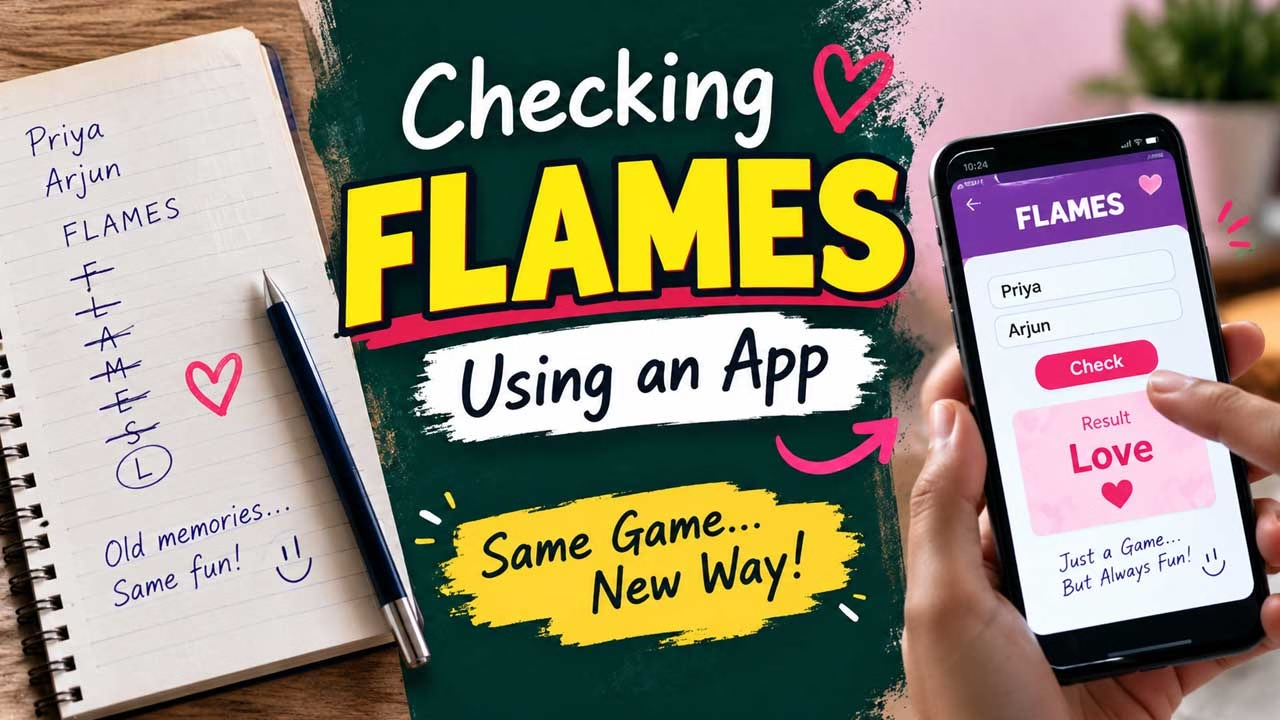
There is something oddly satisfying about typing two names into a phone and waiting for a result that takes only a few seconds to appear. FLAMES has been around far longer than smartphones, but apps have given the old name game a completely different setting. What was once done with a pencil on the last page of a notebook can now be checked with a single tap, making the experience quicker while keeping the same playful curiosity.
A Childhood Game in a Digital Format
FLAMES is essentially a letter-based elimination game. The familiar name represents six possible outcomes: Friends, Love, Affection, Marriage, Enemies and Siblings. The exact wording can vary between versions, but the basic idea remains the same: two names are compared, common letters are removed, and the letters that remain are used to arrive at the final result.
What Happens Behind the Screen?
When a FLAMES app receives two names, it does not analyse photographs, personalities or relationship behaviour. It works with the spelling provided by the user. Matching letters are cancelled, and the number of letters left becomes part of the elimination process. The app then works through F-L-A-M-E-S in a circular manner until only one letter remains.
Why the Input Names Matter More Than People Expect
A small change in the name can completely alter the calculation. Someone using a short nickname may receive a different result from someone entering a full name. The reason is straightforward: the application is counting letters, so adding or removing even one character can change the number carried into the final stage. This is one reason FLAMES results should not be treated as fixed descriptions of two people.
The Result Is Determined by a Fixed Process
There is no random draw taking place when the final answer appears. If exactly the same names are entered using the same rules, the calculation will normally produce the same outcome. This makes FLAMES different from a fortune wheel or random quiz. The result comes from a predetermined sequence of letter cancellation and elimination.
Why Different Apps Can Produce Different Answers
Finding a different answer on another FLAMES website does not automatically mean that one application is malfunctioning. The game has been passed from person to person for years, and variations in its rules exist. Differences can occur in how matching letters are removed or how the circular counting is handled. Some digital calculators follow the traditional counting approach, while others use a simplified mathematical version.
The Fun Is Often in Comparing Results
Instead of checking FLAMES only once, many people use it as a social game. Two friends might enter their names, compare the result and then try different name formats just to see what happens. Someone may even test a nickname against a full name and discover that the outcome changes. That experimentation is part of what makes the app more engaging than simply reading a result and closing the page.
Is a FLAMES App Really Measuring Compatibility?
Not in any scientific sense. The application has no information about how two people communicate, whether they trust one another or what they have experienced together. Its calculation is based entirely on letters. Calling the result a relationship prediction would therefore give a simple game much more authority than it deserves. FLAMES is best understood as entertainment rather than a genuine compatibility assessment.
A Result Can Still Start an Interesting Conversation
Although the calculation cannot predict a relationship, the result can become a useful conversation starter. A surprising answer may lead people to laugh about how they first met, remember playing the game at school or challenge one another to try another pair of names. In that sense, the value of FLAMES is not hidden inside the final letter; it is in the interaction created around it.
What Makes a FLAMES App Pleasant to Use?
A good app does not need complicated features to make the game enjoyable. Clear name fields, quick calculations and an understandable result are usually enough. Showing the calculation step by step can make the experience even better because users can see how the answer was reached instead of being presented with a mysterious result.
Keep the Game Light and Personal
There is also little reason to provide more information than the game requires. Names are enough for a basic FLAMES calculation, so users should be cautious about applications that request unrelated personal details. The simpler the interaction, the closer it remains to the original spirit of the game: two names, a little curiosity and an unexpected answer.
From School Notebooks to Smartphone Screens
The interesting thing about FLAMES is not its mathematical complexity. It is the fact that such a small game has survived long enough to move from handwritten notebooks into modern apps. Technology has changed the way the calculation is performed, but the curiosity behind it remains almost exactly the same. People still want to know what happens when two names are placed into the familiar six-letter formula.
Check Flames
Perhaps that explains why checking FLAMES continues to feel entertaining even when most people understand that the answer is not a prediction. The app provides the calculation, but the laughter, teasing and conversation that follow are created by the people using it. In the end, the most memorable part of a FLAMES result is rarely the letter that survives—it is the story that begins after the screen reveals it.