A Scene That Feels Half Real
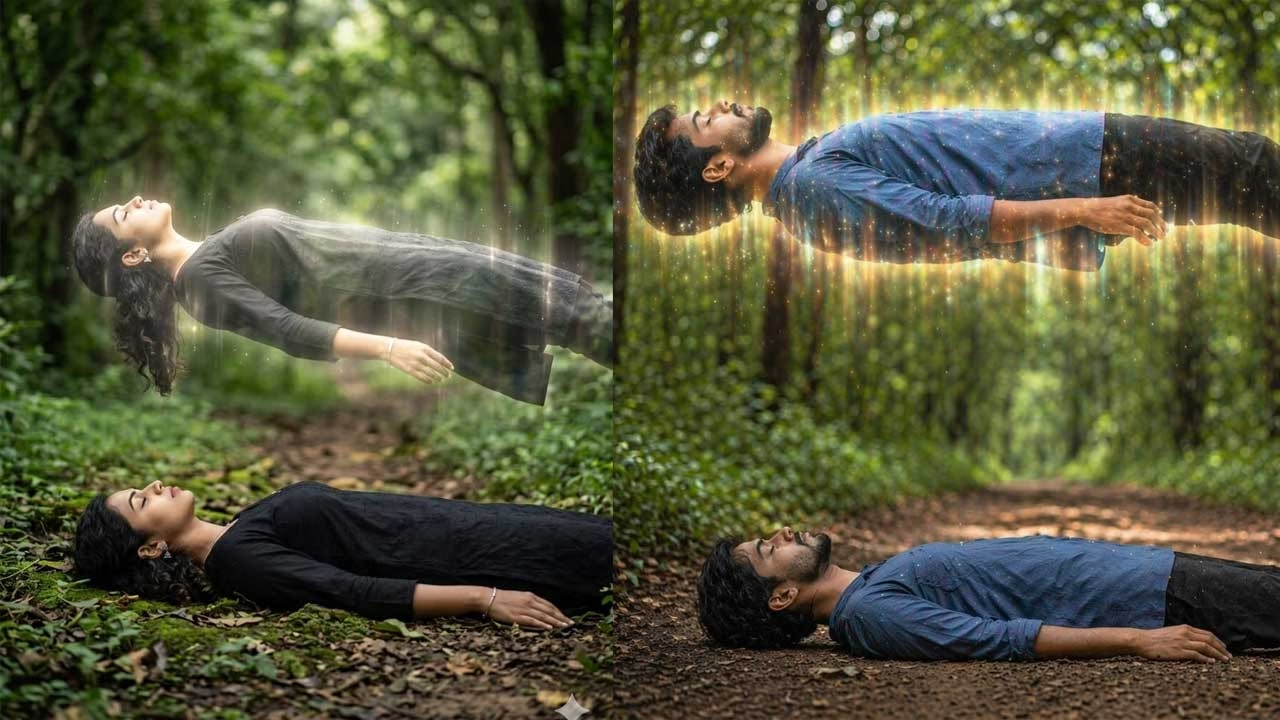
It begins with stillness. A woman lies on a quiet forest path, surrounded by soft green tones and filtered light. Above her, something subtle and impossible unfolds—another version of her rises, suspended in air, mirroring her presence without fully belonging to the same world. The image doesn’t feel loud or dramatic. Instead, it holds a quiet tension, as if reality has slightly shifted rather than broken.
Structure Creates Clarity
The strength of this prompt comes from how clearly it defines the scene. It doesn’t overload the model with abstract ideas but instead builds a precise visual arrangement. A grounded subject, a mirrored double, and a shared identity through clothing all work together to guide the output. The phrase “ethereal double arching in mid-air directly above” plays a key role, ensuring the second figure feels connected rather than separate. When this line is removed or softened, the model often treats the figures as unrelated subjects, losing the intended effect.
Perspective Shapes the Experience
The inclusion of “eye-level cinematic medium shot” keeps the viewer emotionally connected to the scene. During testing, removing this often caused the composition to drift into wide or top-down angles, which made the moment feel distant. Keeping the camera at eye level maintains intimacy. It places the viewer in the same space as the subject, making the surreal element feel more believable rather than staged.
Lens and Depth Add Realism
The mention of a “50mm f/1.8 lens” subtly transforms the output. This focal length creates a natural perspective, avoiding distortion while keeping proportions realistic. The shallow depth of field introduced by f/1.8 softens the background just enough to isolate the subject without losing environmental detail. Without this specification, the scene tends to appear flatter, with less separation between subject and surroundings. The result feels less cinematic and more like a standard render.
Light Controls the Mood
“Soft diffused natural daylight” is one of the most important phrases in the prompt. It keeps shadows gentle and prevents the scene from becoming overly stylized. When replaced with harsher or more dramatic lighting, the image quickly shifts into fantasy territory, losing the quiet realism that makes it compelling. The light here does not draw attention to itself; it simply supports the scene, allowing the surreal element to exist without resistance.
Color Keeps It Grounded
The use of “muted earthy color grading” ensures the forest remains calm and believable. Bright or highly saturated tones tend to overpower the composition, making the image feel artificial. In contrast, muted greens and browns create a stable visual base, allowing the floating figure to stand out without feeling disconnected. This balance between subtle color and sharp detail is what keeps the image cohesive.
Texture Brings It to Life
Details like “rough path” and “fabric texture” may seem small, but they anchor the entire scene. These elements introduce a tactile quality that reinforces realism. When omitted, the image often appears overly smooth, almost polished to the point of losing authenticity. Texture gives weight to the moment, making the surreal aspect feel like it exists within a real environment rather than on top of it.
Small Changes, Different Worlds
Even slight adjustments to the prompt can shift the outcome significantly. Replacing “ethereal double” with “glowing spirit” creates a more fantasy-driven result, often introducing light effects that dominate the frame. Changing the lighting to “golden hour” adds warmth and romance but reduces the neutral, observational tone. Altering the camera description to a wide shot introduces distance, making the scene feel less personal. Each change doesn’t just tweak the image—it reshapes how the moment is experienced.
Identity Feels Continuous
One detail that quietly strengthens the illusion is the phrase “same dress.” It signals continuity between the grounded body and the floating form, making them read as one identity rather than two characters. When this is removed or replaced with different clothing, the output often shifts toward a twin or companion interpretation. Keeping visual consistency across both forms helps the viewer immediately understand that this is a single person in two states.
Face Reference Stabilizes the Output
Including “uploaded face as reference” adds another layer of control. It anchors the identity, especially in a composition where duplication can easily drift into inconsistency. Without it, the model may generate subtle differences between the two figures, weakening the connection. With it, both the grounded and ethereal versions maintain the same facial structure and expression, reinforcing the idea of projection rather than separation.
Prompt:
Surreal astral projection, womenlying supine on a wooded path, uploaded face as reference, ethereal double arching in mid-air directly above him, same dress eye-level cinematic medium shot, 50mm f/1.8 lens, shallow depth of field, soft diffused natural daylight, lush green forest background, muted earthy color grading, high-resolution digital photography, sharp focus on subjects, detailed textures of rough path and fabric, masterpiece,++ hyper-realistic, 8k
Balance Between Real and Unreal
What makes this prompt work consistently is its restraint. It introduces a surreal concept but supports it with realistic photography language. The camera, lighting, and environment all behave as they would in a real shoot. This balance prevents the image from becoming overly stylized. Instead, it feels like a believable moment with one impossible detail, which is often more striking than a fully fantastical scene.