There is a particular kind of photograph that doesn’t feel like it was captured in a moment, but rather gently remembered. It carries warmth without intensity, softness without blur, and emotion without exaggeration. This is the essence of the Soft Traditional aesthetic, a visual approach that has quietly become a signature style in refined portraiture, especially within culturally rooted settings.
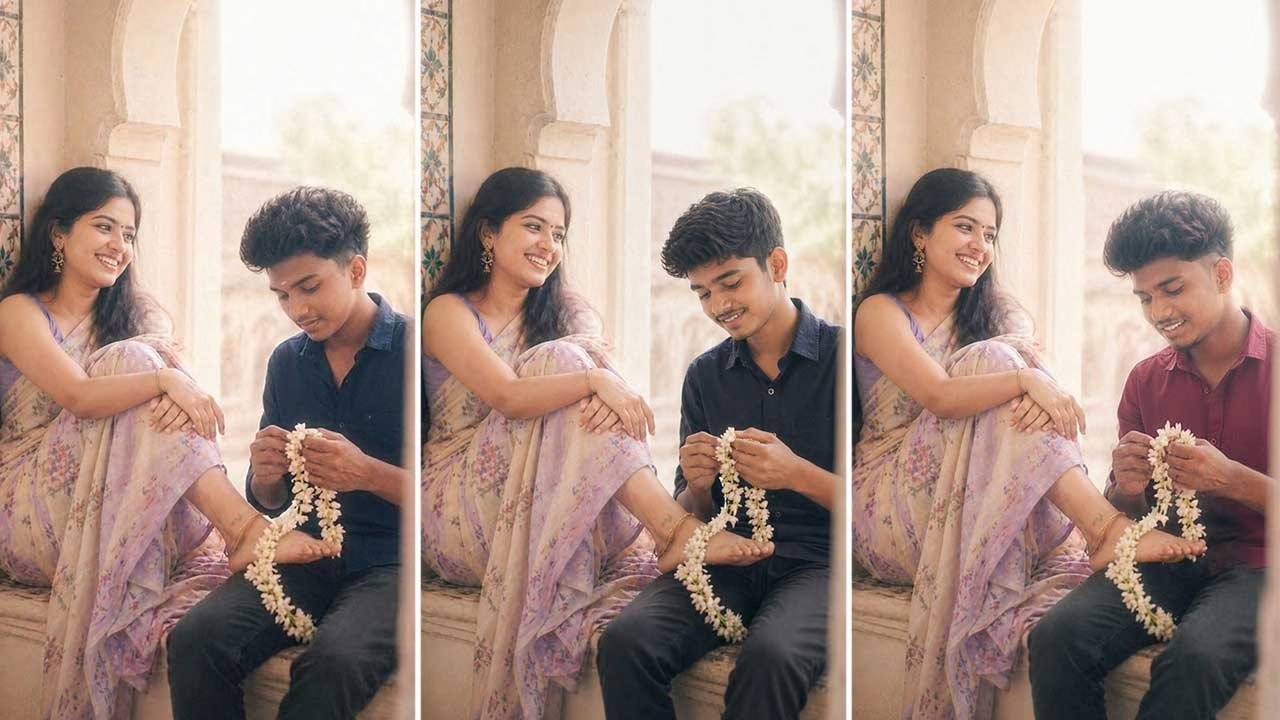
In its most compelling form, this aesthetic is built around a simple but powerful visual idea: a couple framed by architecture, connected through a shared action, and illuminated by natural light that feels almost tangible. At the center of this experience sits the jasmine flower, not just as a decorative detail, but as a visual and emotional anchor that shapes the entire composition.
The Quiet Power of Soft Light in Traditional Portraits
Soft Traditional imagery begins with light that behaves gently. Instead of creating strong contrast or dramatic shadows, the light wraps itself around the subjects, dissolving edges and creating a continuous tonal flow. This effect is often associated with high-key photography, but in this context, it is less about brightness and more about consistency. Every part of the frame feels connected through light.
This kind of illumination is particularly valued in indoor natural light photography because it enhances skin tones and fabric textures without distraction. The absence of harsh shadows allows the viewer to focus on expression and interaction, rather than being pulled toward areas of contrast. The result is an image that feels calm, balanced, and immersive. What makes this style commercially significant is its adaptability. It translates seamlessly across digital screens, print albums, and even large-format displays, maintaining its softness and clarity regardless of medium. This versatility is one of the reasons it has gained strong traction in high-end portrait and wedding markets.
Architecture as Emotion: The Role of the Window Alcove
A traditional window alcove does more than frame a photograph; it shapes how the viewer experiences the scene. The curved arch introduces a sense of enclosure, almost like a stage where a quiet story unfolds. Unlike modern minimal backdrops, this architectural feature carries cultural memory, adding depth without demanding attention. The direction of light entering through the alcove plays a crucial role in defining the mood. When daylight flows from one side, it creates a natural gradient that enhances the softness of the image. This directional light does not carve the subjects into sharp relief but instead blends them into the environment, reinforcing the sense of harmony.
From a visual design perspective, the alcove simplifies composition. It eliminates the need for excessive framing techniques or artificial props, allowing the photographer to focus entirely on the interaction between subjects. This efficiency is particularly valuable in professional settings, where achieving a refined look with minimal complexity is a key advantage.
Jasmine Flower as a Visual Anchor
The presence of the jasmine flower transforms the photograph from a simple portrait into a layered narrative. Its white petals introduce a point of brightness that naturally draws the eye, but its significance goes far beyond visual contrast. Jasmine carries associations of tenderness, care, and quiet celebration, making it an ideal element for storytelling in intimate portraits.
In high-key environments, the flower behaves almost like a light source of its own. It reflects and diffuses illumination, creating a subtle glow that enhances the surrounding tones. This interaction between the flower and light adds dimension to the image, preventing it from feeling flat despite its overall softness.
What makes jasmine particularly effective is its scale and texture. Unlike larger floral arrangements, it remains delicate and unobtrusive, allowing it to integrate seamlessly into the composition. It supports the narrative rather than dominating it, which is essential in maintaining the understated elegance of the Soft Traditional style.
The Gesture That Defines the Frame
A photograph becomes memorable when it captures a moment that feels both specific and universal. In this context, the act of arranging a jasmine garland introduces a gesture that is deeply personal yet widely relatable. It is not a dramatic action, but a quiet one, and that is precisely what gives it power.
This interaction creates a focal point that is not just visual but emotional. The attention given to the flowers, the careful placement, and the shared stillness between the subjects all contribute to a sense of intimacy that cannot be replicated through static posing. The viewer is drawn into the moment, not as an observer, but as a participant in its atmosphere.
Such gestures are increasingly valued in candid couple photography, where authenticity takes precedence over perfection. They provide a narrative thread that connects the subjects, making the image feel cohesive and intentional without appearing staged.
Balancing Color for Emotional Depth
Color in Soft Traditional portraits is less about vibrancy and more about relationship. The interplay between darker tones and lighter fabrics creates a visual rhythm that guides the viewer’s eye across the frame. A deep-toned garment introduces weight, while softer hues maintain the airy quality that defines the aesthetic.
The jasmine flower, with its pure white tone, acts as a bridge between these elements. It connects the darker and lighter areas, ensuring that the composition feels unified. This balance is essential in maintaining visual harmony, particularly in images where contrast is intentionally minimized.
From a broader perspective, this approach to color aligns with current preferences in lifestyle and wedding photography. Audiences are increasingly drawn to palettes that feel natural and cohesive, rather than bold and contrasting. This shift reflects a growing appreciation for subtlety and refinement in visual storytelling.
The Craft of Light Control
Achieving the desired softness in this style requires a precise understanding of how light behaves within an indoor environment. Natural daylight serves as the primary source, but its intensity and direction must be carefully managed to avoid unwanted contrast.
The goal is to create a seamless illumination that enhances every element in the frame. This often involves positioning the subjects in a way that allows light to flow across them evenly, while also ensuring that no part of the image falls into deep shadow. The result is a consistent tonal quality that reinforces the overall softness.
This level of control is particularly important when working with reflective elements like jasmine flowers. Their brightness can easily overpower the frame if not balanced correctly. By maintaining a controlled exposure and allowing light to wrap gently around the subjects, the photographer ensures that the flowers remain luminous without losing detail.
Editing as a Continuation of Vision
Post-processing in Soft Traditional photography is not about transformation but refinement. It builds upon the qualities already present in the image, enhancing them to achieve a cohesive final result. The process begins with subtle adjustments to exposure and tone, ensuring that the high-key effect remains consistent throughout the frame.
The introduction of gentle diffusion adds a layer of softness that complements the natural light, while careful highlight management preserves the integrity of bright elements like jasmine petals. This balance is crucial in maintaining a professional finish that feels both polished and authentic.
Color grading further enhances the mood, introducing warmth that aligns with the emotional tone of the image. The final result is not overly stylized but thoughtfully refined, allowing the photograph to retain its natural character while achieving a level of visual sophistication that meets professional standards.
Aesthetic Value in Contemporary Visual Culture
The Soft Traditional style has found a strong place within modern visual culture because it speaks to a desire for authenticity and connection. In a world saturated with high-contrast, hyper-detailed imagery, its gentle approach offers a refreshing alternative. It invites the viewer to slow down, to observe, and to feel.
This quality has made it particularly appealing in areas such as wedding photography, lifestyle branding, and editorial storytelling. Images created in this style often carry a sense of permanence, making them suitable for both personal keepsakes and professional use. They resonate across different contexts, from intimate albums to curated digital platforms.
The integration of elements like jasmine flowers, traditional attire, and architectural framing ensures that the aesthetic remains rooted in cultural identity while still appealing to contemporary tastes. This balance is what gives it enduring relevance, allowing it to evolve without losing its essence.
Prompt:
Soft low-resolution indoor candid couple portrait with slight blur, grain, and pronounced creamy diffusion glow, high-key bright exposure with lifted whites and soft highlight bloom, warm airy color tone with reduced contrast and gently faded shadows, strong wraparound ambient daylight flooding from the right side combined with soft frontal fill/flash effect to eliminate all harsh shadows faces fully illuminated with smooth even skin tones and zero dark shadow pockets, subtle halation around brightareas creating a dreamy washed light effect without losing subject visibility, medium shot in 9:16 vertical aspect ratio, framed slightly off-center with a soft right-edge foreground obstruction blur, focal length resembling a compact camera or phone (around 35-50mm equivalent), shallow-to-moderate depth of field with overall softness and glowing haze, scene set in a traditional architectural window alcove with curved arch above and tiled border detail on the left wall, both subjects seated on a built-in ledge facing each other at an angle, female subject on the left sittingangle, female subject on the left sitting sideways with her back lighitly against the wall, long straight dark hair falling over her shoulder, wearing a light pastel saree with soft floral patterns and a darker blouse (lavender/purple tone), small traditional earrings, relaxed posture with one leg bent and extended toward the male, her foot resting gently on the nale subject’s lap, arms loosely folded over her knee, head slightly tilted toward him, face glowing with soft diffused highlights and no shadow contrast, smiling warmly with soft eyes looking at the male subject, male subject on the right sitting slightly lower or forward on the ledge, body angled toward her, wearing a dark maroon/purple shirt, short hair, slight stubble, head tilted downward with a gentle, shy smile while looking at the flower garland in hishands, his face also evenly lit with bright soft illumination and no deep shadows, holding and arranging a white jasmine flower garland draped across his hands and partially over her foot, interaction feels intimate and candid, both subjects relaxed and naturally engaged, composition em