The first time I tried generating a South Indian couple image using AI, the result looked technically correct but emotionally empty. The clothing was right, the pose existed, but something felt off—like a stock photo trying too hard. That moment made it clear that writing a prompt isn’t about listing visual elements; it’s about guiding the model to understand culture, posture, and subtle human context.
Understanding Cultural Specificity in Prompts
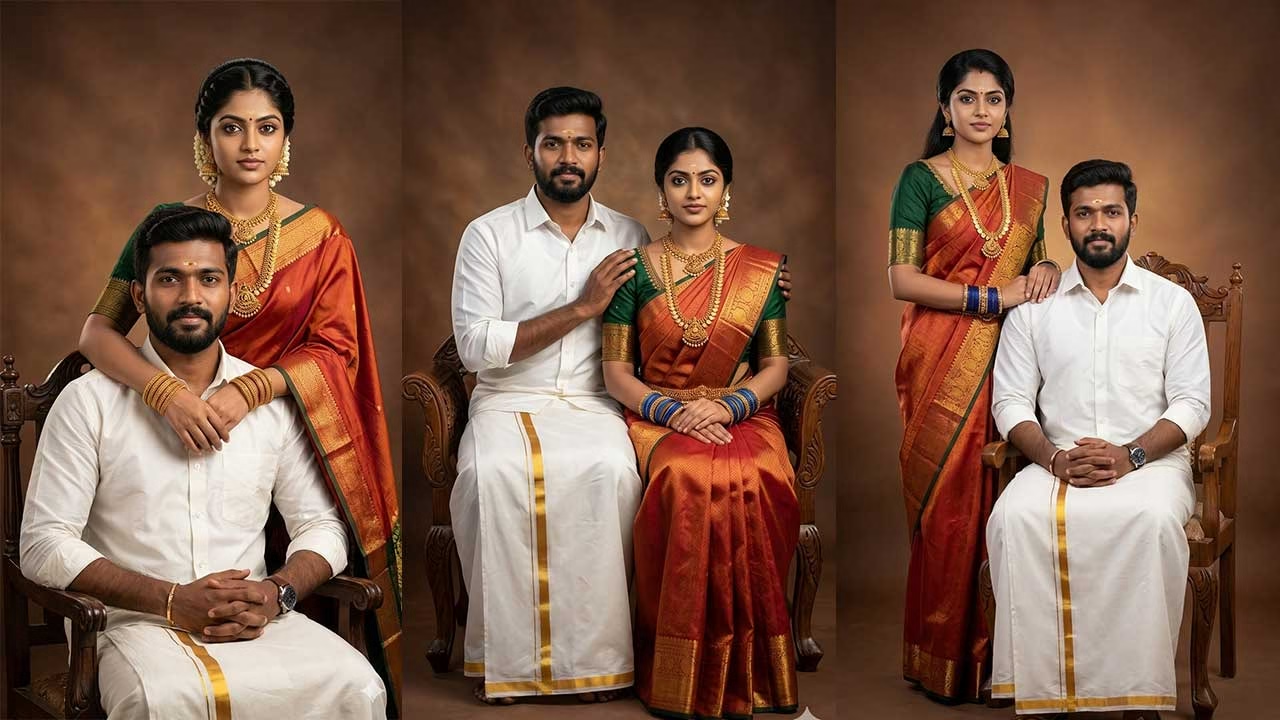
When working with South Indian traditional imagery, generic descriptions fail quickly. A “traditional dress” prompt may produce something North Indian or even fusion-styled. The difference lies in naming specifics like “Kanchipuram silk saree,” “veshti,” or even color tones like off-white with gold borders. These are not decorative details; they anchor the model into a cultural region. Without them, the AI fills gaps with assumptions that dilute authenticity.
Structuring the Core Scene
The arrangement you described—man sitting on a chair and woman standing on the right side—seems simple, but AI models interpret spatial relationships loosely. I noticed that unless the prompt explicitly reinforces positioning, the woman might appear behind, too far away, or even on the wrong side. Adding phrases like “standing close beside the chair, slightly leaning toward him” improves spatial accuracy. It’s not about over-explaining, but about removing ambiguity.
The Role of Body Language
One of the biggest improvements in my tests came from describing body language instead of just poses. Instead of saying “man sitting,” I tried “man sitting comfortably with one hand resting on the armrest, relaxed posture.” Similarly, “woman standing gracefully with a gentle smile, hands lightly clasped.” These small additions bring life into the image, making it feel less staged and more like a captured moment.
Lighting as a Storytelling Tool
Lighting is often overlooked in prompts, but it dramatically changes output quality. When I used “soft natural indoor lighting” or “warm evening light,” the image felt more cinematic. For traditional South Indian settings, warm tones tend to work better because they complement gold jewelry and silk textures. Without lighting guidance, AI often defaults to flat, studio-like illumination.
Texture and Fabric Realism
South Indian attire is deeply tied to texture—especially silk. Simply mentioning “saree” or “veshti” is not enough. I found that including “rich silk texture with visible folds and sheen” significantly improves realism. The AI begins to simulate how fabric reflects light, which makes the image feel tangible rather than digitally smooth.
Avoiding Overcrowded Prompts
There is a temptation to include every detail—background elements, accessories, emotions, lighting, camera angle—all in one long sentence. In practice, this reduces clarity. The best results came from structured prompts where each idea flows naturally. Instead of cramming, I focused on clarity: subject, clothing, pose, environment, then style. The AI performs better when it can prioritize information.
Background Choices Matter More Than Expected
Initially, I ignored the background, assuming the couple would be the focus anyway. But AI tends to fill empty spaces creatively, sometimes with irrelevant or mismatched elements. Specifying “simple indoor setting with wooden furniture” or “traditional home background with soft décor” keeps the scene grounded. A controlled background enhances the subjects rather than distracting from them.
Camera Perspective and Framing
Adding camera-related instructions made a surprising difference. Terms like “mid-shot,” “eye-level angle,” or “slight depth of field” influence how the final image is composed. Without this, AI might generate awkward cropping or unnatural perspectives. For this specific setup, a mid-shot works well because it captures both posture and attire without losing detail.
Iteration Is Not Optional
No prompt works perfectly on the first try. In my testing, even well-structured prompts needed refinement. Sometimes the positioning would be slightly off; other times the expressions felt robotic. Instead of rewriting everything, small tweaks—like adjusting one phrase—helped guide the next output. Treating prompt writing as an iterative process rather than a one-shot task improves consistency.
Balancing Detail and Flexibility
There’s a fine line between guiding the AI and restricting it. Too much control results in stiff images, while too little leads to randomness. The key is to define essentials—like attire, pose, and relationship—while leaving room for the model to interpret finer nuances like facial expressions and micro-details. This balance often produces more natural-looking results.
Real-World Use Cases
This type of prompt is not just for experimentation. I’ve seen it used effectively for wedding invitations, cultural blog visuals, and even small business branding where authentic representation matters. In these cases, accuracy in attire and posture becomes more than aesthetic—it becomes a matter of credibility. A slightly incorrect detail can stand out to viewers familiar with the culture.
A Sample Refined Prompt Approach
A working version that consistently gave good results for me was structured like this: “South Indian couple in traditional attire, man wearing white veshti and shirt sitting comfortably on a wooden chair, woman in Kanchipuram silk saree standing gracefully on the right side near the chair, soft warm indoor lighting, natural expressions, rich fabric texture, simple traditional home background, mid-shot, realistic style.” This isn’t a fixed formula, but a balanced example of clarity and detail.
Download Prompts
What makes this process interesting is that success doesn’t come from technical complexity, but from observational accuracy. The more you notice how real people sit, stand, and interact in such settings, the better your prompts become. AI generation, in this sense, becomes less about commanding a machine and more about translating lived visual understanding into words.