Some AI-generated images feel engineered for attention. They arrive loudly, overloaded with spectacle, demanding reaction before reflection. But every now and then, a prompt appears that feels quieter in intention — less interested in showing off technology and more interested in creating emotional atmosphere. This portrait belongs to that second category.
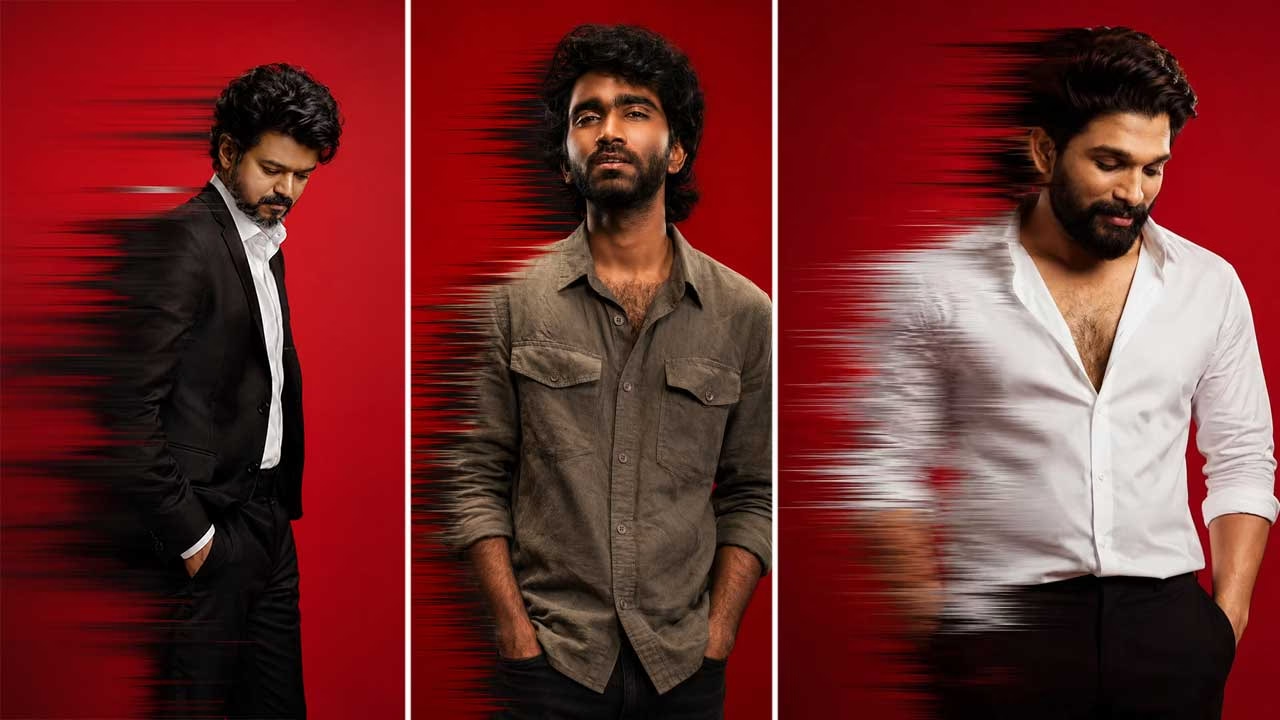
At first glance, the composition seems simple: a man standing against a seamless red background, caught in a side pose, partially dissolving through streaks of distortion. But the image becomes more interesting the longer you sit with it. The details begin behaving like emotional clues rather than decorative elements. The red starts feeling psychological instead of stylistic. The downward gaze shifts the entire energy of the frame. Even the blur itself starts resembling thought more than movement. What makes prompts like this memorable is not technical complexity. It’s emotional direction. The image feels designed around a mood before anything else.
The Weight of Looking Downward
There’s a subtle vulnerability in portraits where the subject avoids direct eye contact. A face turned away from the viewer changes the entire relationship between image and audience. Instead of confrontation, there’s distance. Instead of performance, there’s introspection. That downward gaze in this portrait carries emotional gravity because it interrupts the confidence usually associated with fashion-inspired imagery. The figure isn’t presenting himself like a model standing under bright editorial lights. He feels caught somewhere between thought and disappearance.
The posture contributes heavily to this feeling. Hands partially in pockets always create an interesting emotional contradiction. It can look calm, guarded, detached, uncertain, or composed depending on the atmosphere around it. In this image, the gesture feels protective — as though the character is trying to hold part of himself inward while the environment presses against him. That emotional restraint matters. AI art often becomes far more compelling when it avoids exaggerating emotion. Overly expressive faces can flatten mystery. Here, the emotion exists in smaller gestures: posture, shadow placement, body angle, stillness. The image leaves room for interpretation instead of forcing meaning onto the viewer. And because of that, the portrait feels strangely human.
Red as a Psychological Space
The background is perhaps the most dominant emotional force in the entire composition. Red has always carried unusual power in visual storytelling. It can symbolize danger, obsession, loneliness, desire, violence, ambition, warmth, ego, isolation, or intensity depending on context. But what makes this particular shade interesting is how controlled it feels. It isn’t chaotic red. It isn’t celebratory red. It feels sealed off — like emotional pressure trapped inside a studio wall. The seamlessness of the backdrop removes any sense of physical location. There are no environmental clues to ground the viewer in reality. No windows. No furniture. No architecture. Just uninterrupted color surrounding a solitary figure.
That emptiness creates tension. When backgrounds become too detailed, viewers naturally start building narrative from objects and locations. But when the environment disappears, attention shifts entirely toward mood and body language. The figure becomes isolated inside pure atmosphere. And that atmosphere feels dense. The richness of the red also creates an interesting contrast against the emotional stillness of the character. Normally, such an aggressive color palette would suggest movement or dominance. Yet the figure remains calm, almost withdrawn. That contradiction gives the image emotional complexity. The environment screams while the subject whispers.
In many ways, the portrait resembles emotional containment. The color feels loud enough to represent inner turmoil, while the body language feels controlled enough to suppress it. That tension between intensity and restraint is what gives the image its pulse.
The Elegance of Fragmentation
The distortion effect slicing through the left side of the body is easily the most visually poetic part of the prompt.
What’s fascinating is that the glitch effect does not behave like destruction. It behaves more like erosion. The figure isn’t exploding apart dramatically. He’s quietly dissolving.
That difference matters artistically.
The horizontal streaks create rhythm across the frame, almost like fragments of time passing through the body. The portrait suddenly begins feeling less like a still image and more like a memory struggling to remain stable.
There’s something deeply contemporary about that idea.
Modern digital aesthetics have slowly embraced imperfection as emotional language. Blurs, glitches, compression artifacts, and distortions no longer represent technical failure alone. They now symbolize overstimulation, fractured identity, emotional exhaustion, digital loneliness, or the instability of modern self-image.
This prompt taps into that visual language beautifully.
The disappearing effect feels metaphorical without becoming obvious. It could represent fading presence, emotional fragmentation, mental drift, or simply the sensation of becoming disconnected from one’s surroundings. The image never fully explains itself, which is exactly why it stays interesting.
Some of the strongest AI-generated visuals are the ones that leave emotional gaps for the viewer to complete internally.
This portrait understands the power of incompleteness.
Luxury Without Excess
Another reason the image works is because it borrows from high-fashion aesthetics without becoming consumed by vanity. There’s elegance in the composition, but it never feels obsessed with perfection.
The fabric textures, the sharp contrast, and the carefully controlled lighting all contribute to an atmosphere that feels expensive without appearing loud. The portrait understands that visual sophistication often comes from restraint rather than overload.
Minimal compositions tend to expose weakness quickly. When fewer objects exist inside a frame, every detail becomes important. Lighting matters more. Texture matters more. Posture matters more.
This prompt succeeds because it trusts simplicity.
Even the softness of the shadows plays an emotional role. Hard shadows might have made the image feel aggressive or theatrical. Soft shadows create emotional ambiguity instead. They allow the figure to remain gentle despite the intensity of the red environment.
There’s also an interesting contrast between clarity and disappearance happening simultaneously inside the portrait. The face and upper body remain sharply focused while parts of the figure distort and dissolve. One section becomes hyper-visible while another fades away.
That visual contradiction feels emotionally truthful in a strange way.
Human identity often works like that. Certain parts of ourselves remain sharply defined while other parts feel unstable, fragmented, or difficult to hold together.
The portrait accidentally becomes philosophical because of these visual decisions.
Why Images Like This Stay in Memory
AI art becomes forgettable when it only tries to impress technically. Detail alone rarely creates emotional connection. What people remember are images that carry atmosphere — images that feel like they belong to a mood rather than a category.
This portrait succeeds because it feels emotionally suspended. It doesn’t fully explain who the character is or what he’s thinking. It simply presents presence, color, silence, and fragmentation inside one carefully controlled visual space.
And strangely, that restraint feels more powerful than spectacle.
There’s also something deeply modern about the image’s emotional tone. The distortion, the isolation, the polished surface hiding internal tension — it all reflects contemporary visual culture in subtle ways. The portrait feels aware of digital overstimulation while simultaneously slowing everything down into stillness.
That balance is difficult to achieve.
Many AI prompts attempt to create intensity through endless detail stacking. This one finds intensity through atmosphere instead. The result feels less like generated content and more like visual poetry emerging from controlled visual direction.
In the end, the portrait doesn’t just show a man standing in front of red. It shows emotional erosion wrapped inside elegance. It turns silence into texture. It transforms distortion into feeling.
And that is where AI imagery becomes genuinely artistic — not when it imitates reality perfectly, but when it begins creating emotional spaces that feel impossible to fully explain.
Prompt
“A upload image stylish man side pose against a vivid seamless red studio background, wearing an same dress He is looking downward with a calm, introspective expression, hands partially in pockets. Dramatic cinematic lighting with soft shadows. Strong horizontal motion blur/glitch distortion effect slicing through the left side of his body, creating a dynamic disappearing effect. High-fashion editorial photography style, minimal composition, ultra-detailed fabric texture, rich contrast, modern luxury aesthetic, shallow depth of field, sharp focus on face and upper body, 4K.”