In a rapidly transforming world, where digital innovation often overshadows traditional craftsmanship, many artisans feel lost between the past they inherited and the future they hope to build. The PM Vishwakarma Scheme emerges as a bridge between these two worlds, offering support not only in financial terms but also in recognition, dignity, and empowerment. This program represents a major national effort to preserve the skills that have quietly strengthened India’s economic and cultural structure for centuries.
Understanding the Purpose Behind the Scheme
The primary goal of the PM Vishwakarma Scheme is to support craftsmen who rely on skilled hands rather than large machinery. Unlike typical loan or subsidy programs, this initiative focuses on uplifting artisans whose work forms the identity of local economies across India. By helping them access modern tools, training, and financial assistance, the scheme ensures that traditional occupations do not disappear in the face of urbanization and industrial competition.
A Look at the Eligible Artisan Categories
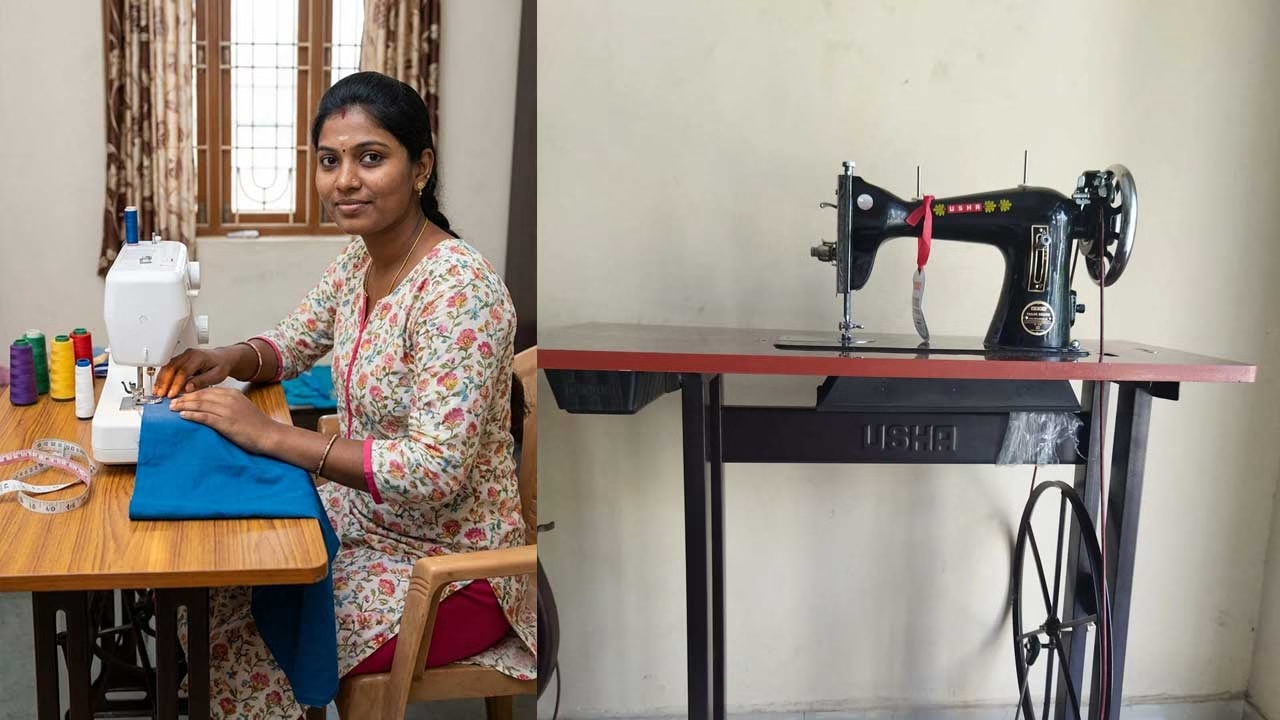
The scheme recognizes a wide range of artisan communities, reflecting the diversity of India’s traditional workforce. It includes professions like carpentry, blacksmithing, sculpting, pottery, tailoring, goldsmithing, and many more. By formally acknowledging these occupations, the government aims to create a structured pathway for craftsmen who were often left out of mainstream development programs. This recognition alone brings a sense of pride to many families who have been practicing the same trade for generations.
Why Skill Development Is a Core Element
Skill training under the PM Vishwakarma Scheme highlights the importance of upgrading traditional abilities with modern techniques. Instead of replacing the artisan’s original method, the training program strengthens what they already know and teaches them additional techniques that can improve productivity, quality, and market value. This combination of heritage and innovation allows artisans to reach broader markets, attract higher earnings, and maintain relevance in a competitive environment.
Financial Support That Removes Barriers
The scheme provides a unique financial structure that includes easy-to-access loans with low interest rates. This removes the long-standing barriers many artisans faced when trying to expand their work. Traditional craftsmen often struggled to obtain loans because their income was not documented in formal ways. Through this initiative, they can now receive financial support without heavy paperwork or strict requirements. This opportunity has helped thousands of artisans consider business growth for the first time in their lives.
Digital Identity and the Role of Vishwakarma Certificates
A key feature of the PM Vishwakarma Scheme is the issuance of a Vishwakarma Certificate and ID card. These documents give artisans an official identity, allowing them to access various benefits without repeated verification. This digital recognition is also useful in connecting them with e-commerce platforms, online marketplaces, and government trade fairs. The certificate acts as a gateway for artisans who previously had no official record of their occupation.
How Modern Tools Transform Traditional Work
The scheme includes provisions for distributing modern tools and equipment that can significantly improve craftsmanship. These tools are selected based on the artisan’s specific trade and are designed to enhance precision, reduce manual effort, and increase production speed. When upgraded tools are combined with the artisan’s inherited knowledge, the final output becomes more marketable, which directly improves income levels and business stability.
The Scheme’s Impact on Market Accessibility
Market access is often the biggest challenge for artisans who rely on local sales to earn a living. The PM Vishwakarma Scheme addresses this by establishing networks between craftsmen and national marketplaces. Through promotional events, government exhibitions, and digital marketing opportunities, artisans can now reach customers beyond their geographical boundaries. This improves product visibility and allows them to sell at competitive prices, rather than being limited to local buyers who may not understand the true value of their work.
Strengthening Rural and Semi-Urban Economies
The scheme plays a significant role in stabilizing rural and semi-urban economies. Many artisans choose not to migrate to cities when they receive the support needed to maintain and grow their businesses at home. This reduces pressure on urban centers while strengthening local communities. The economic ripple effect is powerful, as improved artisan income increases household spending, contributes to local markets, and encourages younger generations to continue working in their family trades.
Empowering Women Artisans Through Inclusive Policies
A notable aspect of the PM Vishwakarma Scheme is its inclusive nature toward women artisans. Many traditional trades are deeply rooted in household activities where women quietly contribute but rarely receive recognition. By formally including them as eligible beneficiaries, the scheme gives women access to financial assistance, training, and upgraded tools. This empowers them to establish independent identities and helps create gender-balanced entrepreneurial opportunities in rural India.
Challenges and the Path Ahead for the Scheme
Although the PM Vishwakarma Scheme offers extensive benefits, implementation challenges do exist. Some artisans are unfamiliar with digital processes and may find online registrations difficult. Awareness campaigns are needed to reach interior regions where traditional craftsmanship thrives but government schemes often do not penetrate. As the program evolves, improvements in outreach, support centers, and local partnerships will ensure that no artisan is left out due to lack of information or digital limitations.
Apply Now
A New Era for India’s Traditional Workforce
The PM Vishwakarma Scheme marks the beginning of a new era for India’s skilled artisans. It connects heritage with opportunity, enabling craftsmen to preserve the professions passed down through generations while adapting to modern economic demands. By lifting barriers and restoring dignity to traditional trades, this initiative encourages artisans to dream bigger and participate in India’s continuously growing economy. The scheme is more than a financial support system; it is a movement that honors the hands that have shaped India’s cultural identity for centuries.