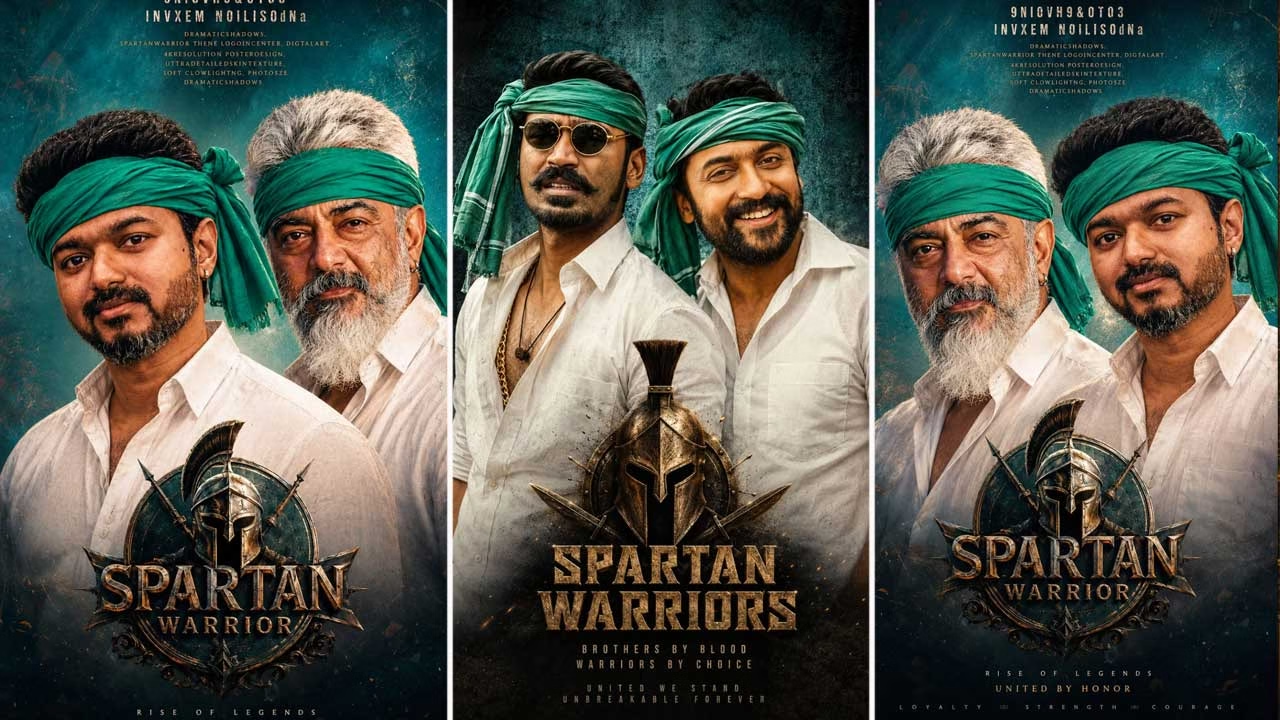
The poster concept feels deeply connected to the visual culture of modern Tamil mass posters, where regional identity and digital stylization exist side by side. At first glance, the image is built around familiarity rather than spectacle. Two young South Indian men stand shoulder to shoulder, smiling confidently while wearing bright green thalappa-style head towels and plain white shirts. That simplicity is important because the poster does not depend on expensive costume design or fantasy armor to establish character presence. Instead, it draws power from posture, facial expression, and recognizable village-inspired styling.
The decision to position both men symmetrically changes the emotional tone of the composition immediately. Symmetry in Indian poster design often symbolizes strength, loyalty, brotherhood, or mythic heroism. Even though this is an AI-generated concept, the arrangement resembles theatrical first-look posters commonly seen during Tamil film launches or actor birthday celebrations. The faces become the emotional center of the image, while the costumes and background work as supporting visual layers rather than distractions.
The bright green head towel is arguably the strongest visual element in the entire prompt. In Tamil rural culture, the thalappa carries strong associations with labor, pride, masculinity, and local identity. AI image systems tend to exaggerate cloth texture and color saturation, which actually works well for this particular design. Against the darker teal background, the green fabric creates immediate visual separation and gives the poster a memorable color identity. The viewer’s eyes naturally move from the bright headwear toward the smiling faces before settling into the darker environmental textures behind them.
The white shirts contribute more to the atmosphere than they initially appear to. In many South Indian poster aesthetics, white clothing symbolizes grounded masculinity, honesty, and social familiarity. Here, the shirts also serve a technical purpose within the composition by reflecting light upward into the facial area. AI generators often use white surfaces to amplify glow effects and contrast. While this can create dramatic lighting, it can also expose rendering problems. Fold patterns sometimes melt unnaturally, collar shadows can lose realism, and sleeve edges may appear overexposed when the lighting intensity becomes too aggressive.
One of the most interesting creative decisions in the prompt is the unexpected inclusion of Spartan warrior-inspired branding in the center logo area. Tamil village styling is usually rooted in earthy realism and emotional familiarity, while Spartan-inspired graphics belong more to fantasy action posters and gaming aesthetics. That contrast creates an unusual hybrid identity for the image. If balanced carefully, it could make the poster feel modern and experimental. If pushed too far, it risks making the visual language feel disconnected from the grounded regional styling established by the costumes and expressions.
The lighting instructions suggest a heavily stylized digital portrait rather than a naturally photographed scene. High contrast lighting, dramatic shadows, and glow effects are commonly used in AI-generated posters because they instantly create perceived depth and intensity. The beard lines, jaw structure, and cheek contours would likely appear more sculpted under this type of lighting setup. However, AI systems often struggle with balance in darker skin tones. Instead of subtle shadow transitions, the rendering may become overly metallic or artificially sharpened. When skin texture enhancement becomes excessive, the faces can lose human warmth and begin resembling digitally painted surfaces.
Costume Styling and Rural Identity
The costume design succeeds because it avoids trying too hard. The white shirts and green head towels feel authentic to Tamil rural styling without becoming costume-drama caricatures. AI-generated village posters sometimes overload characters with exaggerated dirt textures, oversized jewelry, or unnecessary props in an attempt to signal realism. This prompt avoids that mistake by focusing on restrained styling.
The neatly maintained hairstyles and trimmed light beards add a contemporary touch to the otherwise traditional presentation. The result feels closer to a modern rural youth poster rather than a period-film still. That balance between local identity and polished presentation is part of what makes the concept visually appealing.
How AI Interprets Faces and Skin Texture
The demand for “10000% exact facial likeness” highlights one of the biggest technical challenges in AI image generation. Faces are incredibly sensitive to tiny distortions. Even slight inconsistencies around the eyes, beard edges, or smile lines can make a recognizable face feel unfamiliar.
Smiling faces are particularly difficult for AI systems because teeth alignment and cheek tension often become uneven during rendering. Since both men appear side by side in a symmetrical composition, viewers naturally compare facial proportions between them. If one face appears slightly sharper or more detailed than the other, the imbalance becomes immediately noticeable.
The ultra-detailed skin texture request could improve realism if handled carefully, but AI systems frequently interpret “detail” as extreme sharpening. This can lead to exaggerated pores, unnatural forehead shine, and hyper-defined beard strands. Realistic skin usually contains softness and imperfection. When AI pushes detail too aggressively, the image begins to resemble a digital painting rather than a believable portrait photograph.
Lighting, Smoke, and Atmospheric Depth
The teal grunge background appears designed more for mood than location. It does not represent a physical environment as much as it creates emotional atmosphere. Modern AI posters often rely on textured backgrounds filled with smoke overlays, scratched surfaces, dust particles, and gradient shadows to simulate depth. These elements help prevent the composition from feeling flat.
Smoke effects will likely appear around the shoulders and behind the characters to separate them from the background. When used subtly, smoke adds dimensionality and visual layering. However, AI poster generation frequently overuses fog and haze. Excessive smoke can reduce facial clarity and weaken the grounded realism established by the costume styling.
The glow lighting described in the prompt introduces another potential challenge. AI-generated bloom effects often become too strong around white fabric and hair edges. Instead of soft illumination, the image may develop harsh glowing outlines that look digitally artificial. Controlled lighting usually creates a more believable result than excessive brightness.
Visual Hierarchy and Composition
The strongest aspect of the poster is its visual hierarchy. The audience notices the bright green head towels first, then the facial expressions, and finally the center logo and background textures. Good poster design depends on controlling where the eye travels, and this prompt establishes that movement naturally.
The centered emblem reinforces the symmetry of the image and gives the poster a ceremonial feel. Many South Indian hero posters use centered framing to elevate characters into symbolic figures rather than ordinary people. Even without action poses or weapons, the composition still creates a sense of importance.
The vertical 9:16 aspect ratio also changes the storytelling style. Instead of resembling a wide theatrical banner, the poster feels optimized for social media reels, mobile wallpapers, and digital fan edits. This taller format increases facial focus and reduces environmental storytelling, making lighting and expression far more important.
Why the Poster Feels Familiar
The overall aesthetic resembles the fan-made celebration posters frequently shared during Tamil actor birthdays, movie announcements, and local festival promotions. These posters often combine grounded village styling with exaggerated digital polish, creating images that feel emotionally recognizable even when they are heavily edited.
What prevents this concept from becoming generic is its cultural specificity. The green thalappa, the relaxed smiles, and the understated costume design root the image in a recognizable Tamil visual identity. Without those details, the poster could easily become another over-stylized AI portrait filled with random dramatic effects.
Final Thoughts
This poster concept works because it balances rural familiarity with modern digital poster aesthetics. The image does not depend entirely on flashy effects or excessive detail. Instead, it builds visual interest through costume contrast, symmetrical framing, lighting direction, and recognizable cultural styling.
The best version of this poster would probably come from restraint. Softer lighting transitions, controlled skin texture, cleaner smoke effects, and balanced shadows would help preserve the emotional realism of the faces. AI-generated posters become memorable when technology supports character identity instead of overpowering it. This concept has enough personality and cultural grounding to achieve that balance if rendered carefully.
The prompt
ULTRAREALISTIC TAMILVILLAGE STYLEPOSTER OF TWO YOUNG SOUTHINDIAN MENSIDE BY SIDE, BOTH WEARING BRIGHT GREENHEAD TOWEL THALAPPA), STYLISH HAIRCUT.LIGHT BEARD. SMILING FACE. WHITE SHIRT, CINEMATIC LIGHTING TEAL GRUNGE TEXTURED BACKGROUND. HIGH CONTRAST. SHARP DETAILS. SYMMETRICAL “9NIOVH9&0T03 INVXEM NOILISOdNa DRAMATICSHADOWS. SPARTANWARRIOR THENE LOGOINCENTER, DIGTALART. 4KRESOLUTION POSTEROESIGN, UTTRADETAILEDSKINTEXTURE, SOFT CLOWLIGHTNG, PHOTOSZE DRAMATICSHADOWS the original reference image with 10000% exact facial likeness, with no changes to the face at all. Size 9.16