Creating believable AI portraits is no longer just about typing a beautiful scene into a generator and hoping for a miracle. Modern image models respond heavily to structure, hierarchy, descriptive precision, and camera logic. The difference between an average render and a convincing cinematic portrait usually comes down to how carefully the prompt controls composition, lens behavior, lighting direction, clothing texture, and facial realism.
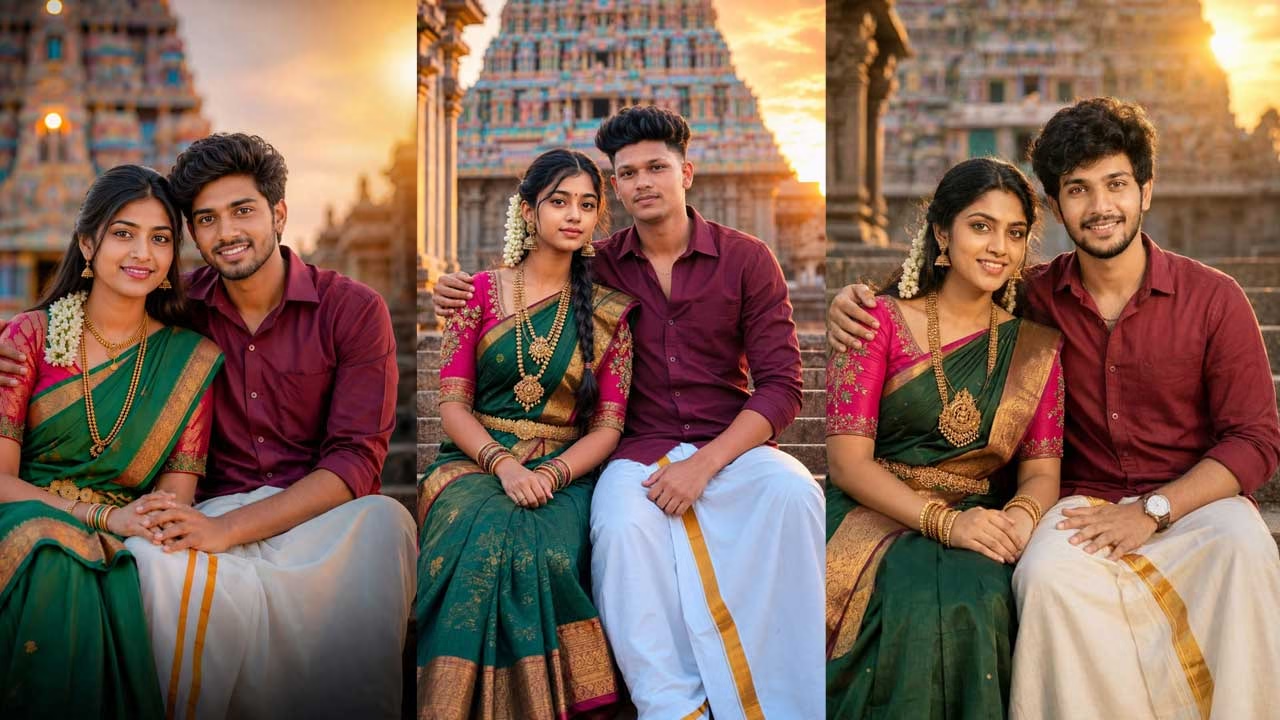
The prompt below is a strong example of layered prompt engineering. It does not simply describe “a couple sitting near a temple.” Instead, it guides the model like a photography director giving instructions during a real shoot. Pose placement, wardrobe, lens choice, depth of field, lighting angle, emotional tone, and even fabric texture are all intentionally controlled. That level of specificity helps the AI reduce ambiguity, which is one of the biggest causes of distorted anatomy and inconsistent rendering.
One important thing experienced AI creators learn early is that image models prioritize certain tokens more heavily than others. Camera framing terms, lighting descriptions, and subject placement often influence the output more than emotional descriptors. In this prompt, phrases like “medium close-up framing from knees upward,” “85mm lens,” and “shallow depth of field” provide technical visual instructions that stabilize the overall composition. Without those details, many models tend to zoom out too far, misplace hands, or produce uneven facial proportions.
The strongest part of this workflow is the balance between realism control and artistic enhancement. Many users overload prompts with extreme quality words like “masterpiece,” “award-winning,” or “hyper detailed,” assuming more adjectives improve realism. In practice, too many stacked enhancement keywords often confuse diffusion models and create waxy skin, plastic textures, or overprocessed lighting. This prompt avoids that problem by grounding realism in physical photography concepts instead of exaggerated marketing-style descriptors.
Another reason this prompt works well is because it establishes visual hierarchy correctly. The AI clearly understands who the primary subjects are, where they are positioned, what they are wearing, and how the background should behave. The temple gopuram is intentionally softened using cinematic depth of field instructions, preventing the environment from competing with the couple’s faces. Many failed AI portraits happen because the background receives equal attention, causing detail fragmentation and poor focal separation.
Facial consistency is especially important when generating South Indian cultural portraits because jewelry, hair accessories, traditional clothing, and warm skin tones introduce many reflective surfaces and fine textures. If prompts are too broad, the model may blend ornaments incorrectly into skin or hair. The layered clothing descriptions here help anchor the model’s understanding of material boundaries. Silk saree texture, zari borders, gold jewelry, jasmine flowers, and embroidered fabric each act as separate visual anchors that improve structural stability during rendering.
Why Prompt Structure Matters More Than Length
A long prompt alone does not guarantee quality. What matters is sequencing. Most high-performing prompts follow a logical visual order:
- Main subjects first
- Pose and composition second
- Clothing and styling third
- Background and atmosphere after that
- Camera and rendering details near the end
This structure helps diffusion models prioritize the image correctly during denoising stages. If technical settings appear too early, some models may ignore pose accuracy. If wardrobe details appear too late, fabric rendering can become unstable.
In this prompt, the couple and their seating arrangement are introduced immediately. That ensures the AI locks pose relationships before processing styling details. This is particularly useful when generating couples because many models struggle with overlapping limbs and shoulder positioning.
Controlling Cinematic Lighting Properly
Lighting direction is one of the biggest differences between amateur prompts and professional ones. Generic prompts often say “beautiful lighting” or “cinematic lighting,” which tells the model almost nothing useful.
Here, the prompt specifies:
- Golden hour sunset
- Warm sunlight from upper right corner
- Orange-golden atmosphere
- Soft cinematic contrast
These instructions create predictable shadow placement. The model understands where highlights should fall across the skin, hair, silk saree folds, and temple steps. Directional lighting also improves depth because shadows separate subjects from the environment naturally.
If lighting becomes too harsh during generation, reducing stylization values or removing HDR references can help. Some models exaggerate sunset warmth excessively, producing orange skin tones. In those cases, adding phrases like “balanced natural skin tones” or “neutral skin highlights” can stabilize complexion rendering.
How Lens Instructions Change the Entire Image
The inclusion of “85mm lens” and “f/1.8” is extremely important. Those are not decorative photography terms. They directly influence how the AI interprets depth compression and subject isolation.
An 85mm portrait lens typically produces:
- Natural facial proportions
- Compressed background perspective
- Softer environmental blur
- Cleaner separation between subjects and background
Without lens guidance, many AI models default to wide-angle compositions, which distort faces and stretch body proportions unnaturally. Portrait-oriented focal lengths help maintain realism.
The shallow aperture value also tells the AI how aggressive the bokeh should be. This prevents the temple background from becoming unnaturally sharp.
Improving Skin Texture and Realism
One of the biggest mistakes in AI portrait prompting is excessive smoothness. Models often interpret “beautiful skin” as plastic skin. The prompt solves this problem by using grounded descriptors:
- Natural skin texture
- Realistic lighting
- Ultra-sharp facial details
- Realistic shadows
These phrases encourage micro-contrast instead of artificial airbrushing.
If faces still appear synthetic, experienced users often reduce stylization settings or remove excessive rendering keywords like:
- Ultra detailed skin
- Perfect face
- Flawless complexion
Ironically, imperfections improve realism.
Why Traditional Clothing Often Breaks AI Models
South Indian traditional attire introduces multiple rendering challenges simultaneously:
- Reflective gold jewelry
- Complex saree folds
- Zari embroidery patterns
- Layered accessories
- Dense fabric textures
When prompts lack hierarchy, the model may merge jewelry into clothing or generate asymmetrical ornaments. Separating each accessory clearly improves accuracy.
For example, this prompt individually specifies:
- Temple jewelry necklace
- Gold bangles
- Waist belt
- Jhumka earrings
- Jasmine flowers
Breaking details apart like this creates cleaner material segmentation during rendering.
Using Negative Prompts Effectively
Negative prompting is often underestimated. Even a strong primary prompt can fail if unwanted behaviors are not suppressed.
For this type of portrait, useful negative prompts might include:
- Extra fingers
- Blurred face
- Crossed eyes
- Plastic skin
- Distorted hands
- Duplicate jewelry
- Oversaturated colors
- Bad anatomy
- Unnatural smile
- Deformed saree folds
Negative prompts are especially valuable when using SDXL-based models because those models sometimes over-detail background objects or generate unstable hand placement in couple portraits.
Aspect Ratio Selection Changes Composition
The prompt uses –ar 9:16, which is optimized for vertical cinematic framing and mobile-first viewing. This ratio works particularly well for:
- Instagram reels thumbnails
- Poster-style portraits
- Wedding portrait aesthetics
- Full-height subject framing
However, aspect ratio also changes model behavior.
Wide ratios like 16:9 often introduce more background detail and reduce facial focus. Square ratios tend to tighten framing but sometimes crop jewelry or hands awkwardly.
For traditional couple portraits, vertical framing usually provides better balance between clothing visibility and facial intimacy.
Understanding Model Differences
Different AI tools interpret prompts differently, even when using identical wording.
Midjourney tends to prioritize artistic composition and cinematic color grading automatically. It responds strongly to stylization parameters like –s 250, producing richer atmosphere but occasionally over-enhancing skin.
Stable Diffusion XL gives more manual control. It handles negative prompting better and allows checkpoint customization, but often requires stronger anatomy correction workflows.
Flux models generally produce cleaner natural skin and stronger text understanding, especially for realistic ethnic features, though some versions may soften fabric texture too much.
DALL·E is often better at prompt comprehension and coherent scene assembly, but it sometimes simplifies fine cultural detailing unless the prompt is highly specific.
Experienced creators usually adapt prompts slightly for each platform instead of copying the exact same syntax everywhere.
Common Generation Problems and Practical Fixes
Problem: Faces look too symmetrical and artificial
Fix: Reduce over-stylization and remove excessive beauty descriptors.
Problem: Saree folds become chaotic
Fix: Simplify fabric descriptions and reduce conflicting texture keywords.
Problem: Temple background steals focus
Fix: Strengthen depth-of-field instructions and add “background softly blurred.”
Problem: Hands appear distorted
Fix: Specify natural hand placement clearly and use inpainting correction if needed.
Problem: Skin turns orange during sunset scenes
Fix: Add “balanced natural skin tones” or reduce HDR intensity.
Problem: Jewelry duplicates randomly
Fix: Use fewer accessory repetitions and add negative prompts for duplicate ornaments.
Why “Style Raw” Helps Realism
The –style raw parameter is important because it reduces automatic artistic beautification. Without it, some models aggressively enhance contrast, sharpen textures unnaturally, or create painterly lighting artifacts.
Raw mode preserves more photographic neutrality. That is especially useful when generating cultural portraits where fabric realism and authentic skin rendering matter more than fantasy aesthetics.
Prompt Used
Ultra-realistic cinematic portrait of a young South Indian couple sitting closely together on ancient temple steps during golden hour sunset, exact front-facing seated pose, boy on the right with one arm around the girl’s shoulder, girl on the left slightly leaning toward him, both smiling softly at camera. Girl wearing deep emerald green silk saree with rich golden zari border and bright pink blouse with traditional floral embroidery, layered long temple jewelry necklace, gold bangles, waist belt, jasmine flowers (gajra) in tied black hair, traditional jhumka earrings. Boy wearing dark maroon full-sleeve shirt and traditional white veshti/dhoti with golden border, stylish curly hair, clean youthful face, warm natural smile. Background featuring large colorful South Indian temple gopuram softly blurred with cinematic depth of field, warm sunset sunlight glowing from upper right corner, orange-golden atmosphere, authentic Tamil cultural aesthetic. Composition centered exactly like DSLR couple photoshoot, medium close-up framing from knees upward, hands naturally placed together in foreground, ultra-sharp facial details, creamy bokeh background, shallow depth of field, natural skin texture, realistic lighting, vibrant traditional colors, soft cinematic contrast, emotional romantic mood, highly detailed fabric texture, professional wedding photography style, 85mm lens, f/1.8, HDR, ultra realistic, 8k quality, symmetrical composition, realistic shadows, premium color grading. –ar 9:16 –style raw –v 6 –s 250