
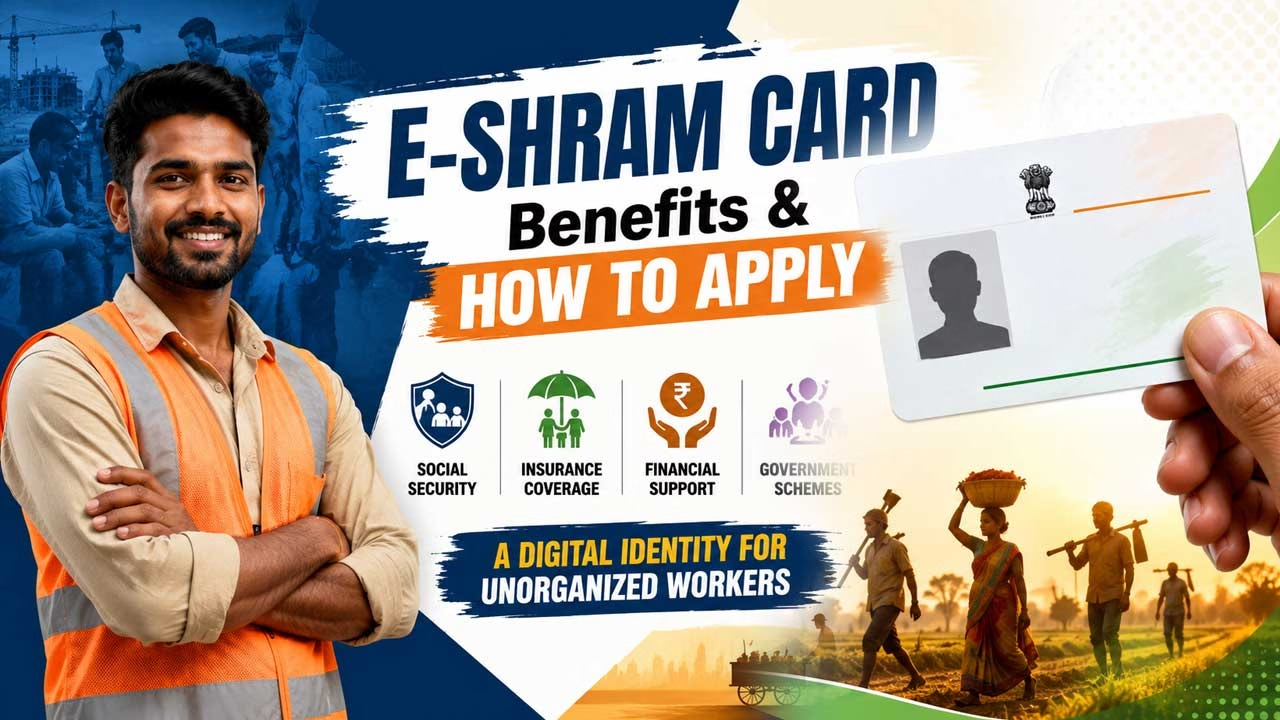
Before sunrise, millions of people across India begin work without appointment letters, salary slips, or job security. Construction helpers lift materials at crowded sites, street vendors arrange small stalls beside busy roads, delivery workers travel through traffic-filled cities, and daily laborers wait for temporary work opportunities. These workers form the backbone of the unorganized sector, yet many remain outside structured welfare systems. The E-Shram card was introduced to bring visibility to this workforce by creating a national digital identity system designed specifically for informal laborers.
Understanding the Purpose Behind the E-Shram Initiative
The E-Shram card is not simply another government document meant for record keeping. Its larger purpose is to create a centralized database of workers employed in the unorganized sector. Through this system, registered workers receive a Universal Account Number that digitally stores their occupational and personal details. The initiative helps authorities understand the scale, migration patterns, and working conditions of laborers who often move between jobs without formal employment records. This shift from invisible labor to recognized worker identity is one of the scheme’s most important long-term goals.
Why India Needed a Digital Worker Registry
For decades, one of the biggest challenges in labor welfare planning has been the absence of accurate worker data. During emergencies such as lockdowns, floods, or economic disruptions, identifying vulnerable workers quickly becomes difficult because many lack official employment records. The E-Shram database attempts to solve this gap by creating a nationwide system that maps workers based on occupation and region. This approach improves the possibility of delivering relief measures and welfare support more efficiently during future crises.
How the E-Shram Card Supports Worker Security
The E-Shram system is connected with social security support intended for workers in vulnerable occupations. Registered workers may become eligible for accidental insurance coverage and certain welfare-linked benefits announced by authorities from time to time. For families dependent on unstable daily income, even limited financial protection during emergencies can reduce serious economic pressure. The card itself does not guarantee permanent income assistance, but it creates a pathway through which workers can be identified for future support schemes more effectively.
More Than a Card: A Step Toward Worker Recognition
One of the deeper social impacts of the E-Shram initiative is recognition. Informal workers are often treated as temporary labor despite contributing significantly to transportation, agriculture, manufacturing, sanitation, domestic services, and local trade. The registration system acknowledges these occupations as part of the country’s economic structure. In many ways, the card symbolizes an attempt to formally include workers who have historically remained outside organized employment databases and policy discussions.
Why the Scheme Matters in a Digitally Changing Economy
India’s welfare systems are increasingly becoming digital through Aadhaar verification, online banking, and direct benefit transfers. Workers without digital identity records may face difficulty accessing future schemes connected to social security, healthcare, insurance, or training programs. The E-Shram card acts as an entry point into this evolving system. It encourages workers from rural and urban areas to establish a formal digital presence without requiring complicated paperwork or advanced educational qualifications.
Who Can Register for an E-Shram Card
The scheme is mainly designed for workers employed in the unorganized sector who are not covered under major formal employment benefit systems. Occupations such as construction labor, farming assistance, tailoring, street vending, domestic work, fishing, delivery services, and transport-related work commonly fall within eligibility categories. Applicants are generally expected to belong to a specified age group and possess an Aadhaar-linked mobile number for verification during the registration process.
Documents and Information Usually Required
The registration process remains relatively simple so that workers from different educational backgrounds can complete it without difficulty. Aadhaar information plays a central role in identity verification, while bank account details and mobile numbers are commonly required for communication and benefit-related processes. Applicants may also need to provide occupation details, residential information, and other basic records. Entering accurate details becomes important because future welfare communication may depend on the information stored in the system.
How to Apply for the E-Shram Card Online
Workers can register for the E-Shram card through the official portal using their Aadhaar-linked mobile number. During the process, applicants must complete OTP verification and enter their personal, occupational, and banking details carefully. Once registration is completed successfully, the system generates the worker’s Universal Account Number and digital E-Shram card. Many workers also prefer applying through Common Service Centres, where trained operators assist people unfamiliar with online procedures or digital forms.
The Role of Common Service Centres in Rural India
In smaller towns and villages, Common Service Centres have become an important bridge between digital governance and ordinary citizens. Many laborers may not own smartphones or may feel uncomfortable navigating online portals independently. Service centre operators often help applicants complete registration, verify details, and download cards properly. This local assistance has played a major role in increasing E-Shram registrations among workers who otherwise remain disconnected from digital government systems.
Common Misunderstandings About the Scheme
Some applicants mistakenly assume the E-Shram card guarantees monthly payments or direct employment opportunities immediately after registration. In reality, the card mainly functions as a worker identification and welfare linkage system. The benefits available can change depending on government programs introduced over time. Understanding this distinction is important because unrealistic expectations sometimes create confusion among workers regarding what the scheme is intended to provide and how welfare support is actually delivered.
Apply Now
Why the E-Shram System Could Become More Important Over Time
As labor policies continue shifting toward data-based welfare planning, workers with verified digital records may gain better access to insurance schemes, emergency support, skill training programs, and social security initiatives. The E-Shram card represents an effort to formally recognize millions of workers who have spent years contributing to the economy without structured protection or documentation. For many workers, registration is not only about present benefits but also about securing visibility in a future where digital records increasingly shape access to opportunities and welfare systems.