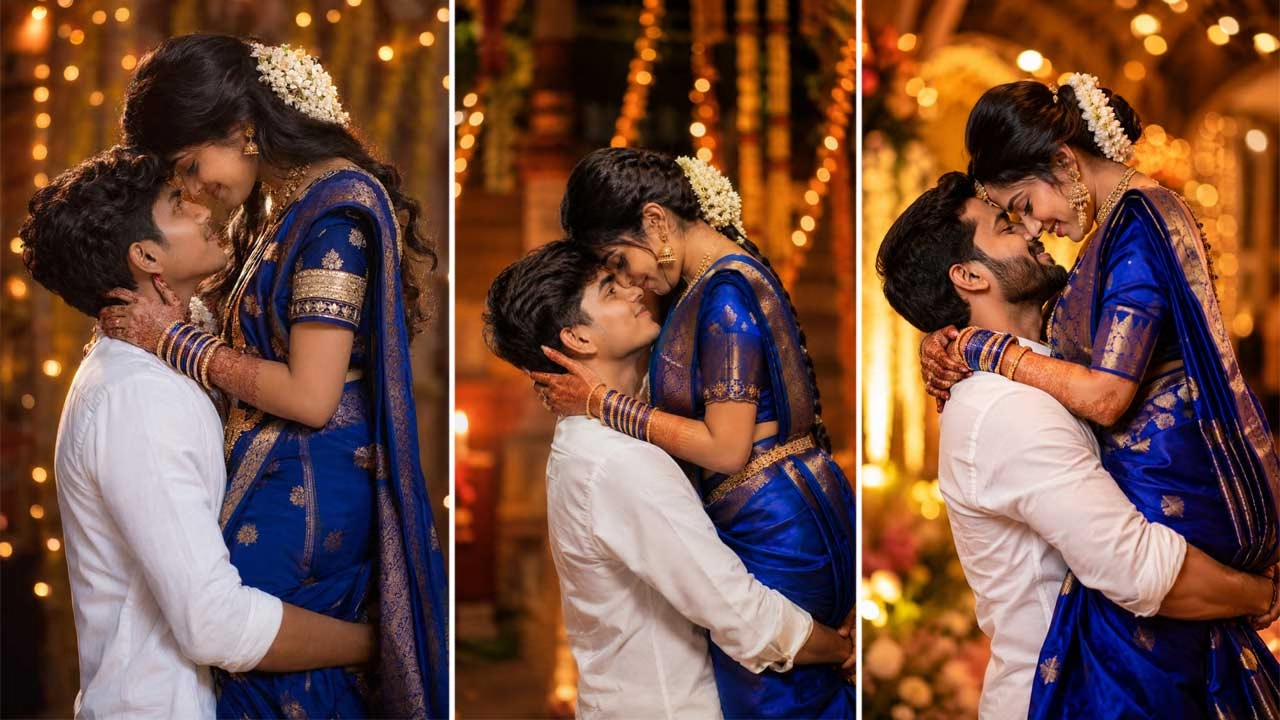
There is something unusual about AI-generated wedding portraits today. They no longer look like digital paintings made by software. With the right prompt and advanced AI tools, an image can feel as emotional and detailed as a real wedding photograph captured during a private moment. The royal blue saree, the warm golden lighting, and the intimate pose in this prompt together create a scene that feels less like artificial art and more like a memory preserved through a camera lens.
Why This Prompt Feels Cinematic Instead of Artificial
Most AI wedding prompts fail because they overload the scene with unnecessary details. This prompt works differently. Every element has a visual purpose. The white shirt on the groom balances the richness of the royal blue saree, while the golden embroidery reflects the warm background lighting. These small choices help AI models understand contrast, color harmony, and emotional focus more accurately.
The cinematic feel mainly comes from the emotional direction given inside the prompt. Instead of simply describing poses, the prompt asks for a forehead-touch or kiss pose with emotional expressions. Modern AI tools respond strongly to emotional keywords because they influence facial softness, eye focus, and body positioning in generated images.
Importance of Fabric and Texture Descriptions
AI image generators have become highly sensitive to material descriptions. Mentioning “royal blue silk saree” immediately changes how light behaves inside the image. Silk creates reflective highlights, smooth folds, and richer color depth. When combined with “golden embroidery,” the AI naturally introduces premium wedding aesthetics without needing extra instructions.
Traditional bridal details like mehndi, bangles, and floral hair accessories also improve realism. These elements prevent the portrait from looking generic. Instead of producing a random couple image, the AI understands the cultural identity and builds finer detailing around the bride’s appearance.
How Professional AI Tools Handle Lighting
Premium AI tools generate better wedding portraits because they interpret lighting direction more intelligently. The phrase “warm orange and golden bokeh lights” guides the software toward creating a cozy evening atmosphere. Rather than producing flat studio lighting, the image develops layered brightness with soft highlights around skin and clothing edges.
Dreamy lighting also helps smooth harsh textures that often make AI portraits look fake. Professional tools use this style to blend skin tones naturally and create depth between foreground and background subjects. That is why cinematic wedding prompts usually include terms related to glow, warmth, or soft blur.
Why the Background Matters More Than Most People Think
In wedding photography, backgrounds quietly control the emotional tone of the image. A cluttered or sharp background can distract viewers from the couple. This prompt avoids that problem by requesting a shallow depth of field and soft blur effect. These instructions force the AI to keep the visual attention entirely on the bride and groom.
The bokeh lighting effect also gives the portrait a premium DSLR appearance. Instead of flat digital sharpness, the image gains a natural camera-like softness that resembles high-end wedding photography captured through expensive portrait lenses.
Creating Realistic Skin Without Overediting
One major improvement in newer AI tools is their ability to generate realistic skin texture. Older models often produced plastic-looking faces with unnatural smoothness. By adding “ultra realistic skin texture” in the prompt, the AI focuses on preserving tiny facial details like natural shadows, skin gradients, and soft highlights.
This becomes especially important in close wedding portraits because viewers immediately notice facial realism. A properly written texture instruction helps maintain authenticity while still keeping the image polished and visually attractive.
The Role of Vertical Composition in Wedding Portraits
The 9:16 ratio mentioned in the prompt is not just for social media compatibility. Vertical framing changes how the AI structures the entire composition. It creates more space for flowing saree drapes, lifted poses, and layered lighting effects from top to bottom.
Wedding portraits often look more immersive in vertical format because the composition feels taller and emotionally closer. This ratio is also highly optimized for mobile viewing, which is where most cinematic AI portraits are now shared and consumed.
Why Negative Prompts Are Equally Important
Many users focus only on describing what they want while ignoring what should be avoided. Negative prompts solve this problem. Terms like “extra fingers,” “distorted hands,” and “duplicate body parts” directly prevent common AI generation mistakes.
Professional creators use negative prompts as quality filters. Instead of fixing errors later through editing, they reduce imperfections during the generation stage itself. This saves time and produces cleaner outputs with fewer retries.
Emotional Framing Creates Better AI Results
AI tools respond surprisingly well to emotional storytelling. The intimacy described in this prompt gives the image a human atmosphere instead of a posed commercial appearance. Emotional framing affects facial expressions, eye direction, and body posture in subtle ways.
This is why highly successful prompts rarely describe only clothing or backgrounds. They include emotional cues that guide the AI toward creating believable human interaction. In wedding portraits, emotion often matters more than technical perfection.
How High-End AI Tools Interpret Wedding Photography Style
Modern AI platforms are trained on millions of photography references. When the prompt mentions “wedding photography style” and “DSLR quality,” the model begins imitating real-world camera behavior. It creates lens blur, cinematic exposure, balanced shadows, and natural light falloff automatically.
These details are difficult to achieve with simple prompts. Professional AI tools perform better because they understand photography language rather than just object descriptions. That difference becomes visible in skin realism, color grading, and image depth.
Full AI Prompt
Create a romantic Indian wedding portrait of a young couple in a cinematic style. The groom is wearing a clean white shirt and lifting the bride in his arms. The bride is dressed in a rich royal blue silk saree with golden embroidery, heavy traditional bridal bangles, mehndi on hands, floral hair accessories, and elegant gold jewelry. They are sharing an intimate forehead-touch/kiss pose with emotional expressions. Warm orange and golden bokeh lights in the background, soft dreamy lighting, shallow depth of field, ultra realistic skin texture, vibrant colors, wedding photography style, DSLR quality, soft blur background, cozy romantic atmosphere, vertical composition, high detail, 9:16 ratio. Negative Prompt: low quality, blurry face, extra fingers, distorted hands, bad anatomy, duplicate body parts, watermark, logo, text, oversaturated, cartoon, low resolution, cropped face, noisy image.
Fine-Tuning the Final Output for Premium Results
Even with a strong prompt, professional users usually generate multiple versions before selecting the final image. Small variations in lighting, facial symmetry, or saree folds can dramatically change the emotional quality of the portrait. Advanced AI tools allow creators to upscale details, refine faces, and enhance textures without damaging realism.
The strongest wedding portraits are often the ones that feel effortless. When the prompt balances emotion, lighting, realism, and cultural detailing correctly, the AI stops producing images that look generated. Instead, it creates scenes that resemble moments captured naturally during a real wedding celebration.