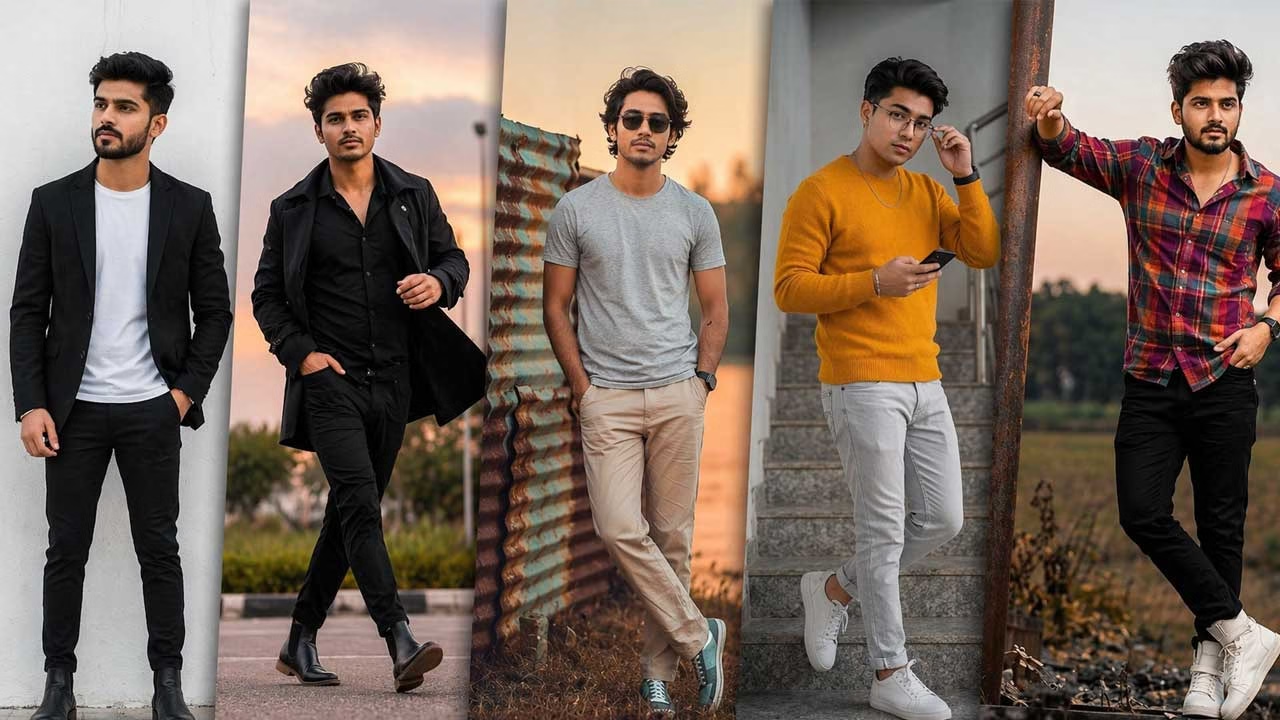
Most AI-generated images fail in a very specific way—they look visually rich but physically unconvincing. The lighting may be perfect, the textures sharp, yet something feels off. That “off” feeling usually comes from posture. Here we discussed about how Pose AI approaches this exact problem differently by treating pose as the starting point rather than an afterthought.
Moving Away from Random Generation
Typical AI workflows depend heavily on trial and error. You write a prompt, generate an image, and hope the pose aligns with your idea. If it doesn’t, you regenerate again. This cycle wastes time and rarely gives consistent results. Pose AI changes this dynamic. Instead of relying on randomness, it allows creators to define posture intentionally. This shift reduces unpredictability and makes the process more structured.
Understanding Pose as a Communication Tool
Body language carries meaning. A slight tilt of the head, the angle of shoulders, or the position of hands can completely change how an image is perceived. Many AI tools ignore this layer and focus on surface-level aesthetics. With Pose AI, posture becomes part of the storytelling. It helps convey emotion and context without relying on additional visual effects. This makes the final output feel more grounded.
Testing in Real Creative Scenarios
While experimenting with Pose AI in different projects, one thing became clear—it reduces correction time. In traditional workflows, a large portion of effort goes into fixing unnatural body positioning after generation. Using Pose AI, that correction phase becomes minimal. The base structure is already aligned with the intended concept, allowing more time to focus on refinement rather than fixing errors.
Improving Workflow Predictability
One of the less discussed challenges in AI creation is inconsistency. Even with the same prompt, outputs can vary widely. This makes it difficult to maintain a consistent style across multiple visuals. Pose AI introduces a level of predictability. Once a pose is defined, it acts as a stable framework. This is particularly useful when working on series-based content or brand visuals.
Redefining Reference Creation
Before tools like Pose AI, creators depended on external references. This often meant browsing through multiple images to find something close to the desired pose. Pose AI eliminates that dependency. Instead of adapting your idea to match available references, you generate a pose that matches your idea. This reverses the traditional workflow in a meaningful way.
Combining Structure with Creative Freedom
There is a common concern that adding structure might limit creativity. In practice, the opposite happens. By removing uncertainty in posture, creators gain more freedom to experiment with style, lighting, and composition. Pose AI handles the foundational layer, allowing the creative focus to shift toward artistic decisions rather than technical corrections.
Where It Makes the Biggest Difference
This approach is particularly effective in projects where human presence is central. Character design, promotional visuals, and narrative imagery benefit the most. In these cases, posture is not just a detail—it defines the entire image. Having control over it improves both quality and impact.
Observing Limitations During Use
While Pose AI improves accuracy, it is not a complete replacement for creative judgment. Some complex poses may still require adjustment or refinement depending on the context. However, even in these situations, it provides a much stronger starting point compared to generating poses randomly.
Speed and Efficiency Gains
Another noticeable advantage is the reduction in iteration time. Instead of generating multiple images to get one usable pose, creators can focus on refining a single structured output. This leads to a more efficient workflow, especially when working under time constraints or producing content at scale.
A Different Way to Approach AI Tools
What stands out most is the shift in mindset. Instead of asking the AI to “create everything,” Pose AI encourages creators to guide the process more deliberately. This results in outputs that feel less accidental and more aligned with the original vision.
Pose AI Link
Building a More Reliable Creative Process
Over time, using Pose AI changes how projects are approached. It becomes less about experimenting blindly and more about constructing visuals step by step. That reliability is what makes it valuable—not just as a tool, but as part of a more controlled and thoughtful creative workflow.