
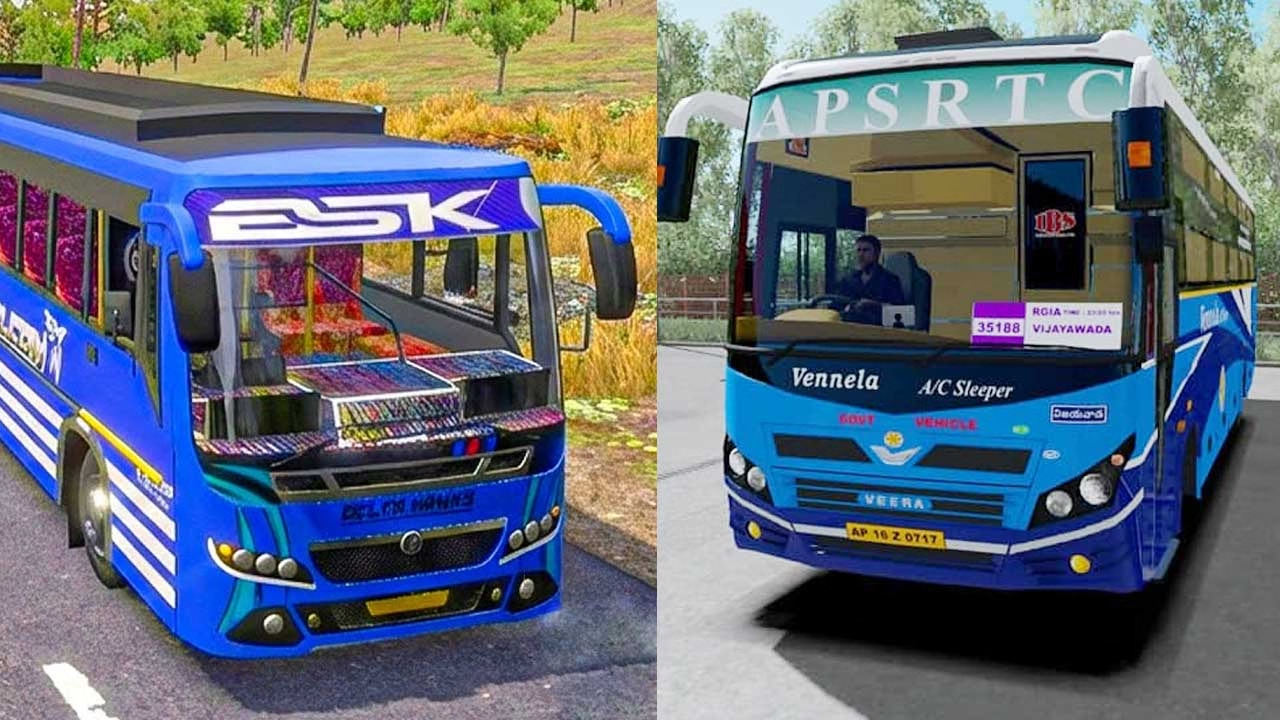
Opening Bus Simulator India doesn’t give the impression of entering a game—it feels closer to stepping into a structured driving environment. There is a noticeable lack of dramatization. Instead of trying to entertain instantly, the app builds its experience slowly, almost like it expects the user to settle into its pace rather than chase quick rewards.
Understanding Movement Instead of Controlling It
One of the first things I noticed during extended usage is that driving here is less about control and more about interpretation. Vehicles around you don’t behave in isolation; they react in clusters. This forces you to observe patterns in movement rather than focus only on your own bus. Over time, I started anticipating flow rather than reacting to sudden changes.
The Role of Space Management in Gameplay
Unlike traditional simulators where lane discipline is the core, this app emphasizes space. Managing gaps between vehicles becomes more important than staying within lines. Even a small miscalculation in spacing can lead to chain reactions in traffic. This creates a different kind of challenge that feels closer to real-world navigation.
Speed Feels Secondary to Timing
In most driving games, speed defines progress. Here, timing plays a bigger role. Accelerating at the wrong moment can disrupt your entire route, while maintaining controlled timing helps avoid unnecessary stops. This shift from speed-based to timing-based gameplay changes how you approach every stretch of road.
Environmental Feedback Over Visual Detail
While the visuals are grounded in Indian settings, what stands out more is how the environment communicates with the player. Road width, traffic density, and surrounding movement subtly signal how you should drive. Instead of relying on indicators or prompts, the app uses environmental cues to guide decisions.
Driving Errors Are Gradual, Not Sudden
Mistakes in this app don’t feel abrupt. They build up. A slightly wrong turn angle, a delayed brake, or a misjudged gap slowly leads to a problematic situation. This gradual error system makes the experience feel more natural, as it mirrors how real driving mistakes develop over time.
Consistency Over Aggression
Aggressive driving doesn’t work well here. The app rewards consistency—steady steering, controlled speed, and predictable movement. During testing, I found that maintaining a calm driving style resulted in fewer complications compared to trying to rush through traffic.
How Repetition Changes Player Behavior
After multiple sessions, something interesting happens. You stop experimenting and start refining. The app naturally shifts your focus from “trying things” to “doing things correctly.” This transition is subtle but important, as it reflects a deeper level of engagement.
Device Performance and User Adaptation
The experience varies slightly depending on the device, but the app allows enough flexibility to adjust. Lower-end devices benefit from reduced visual settings, while higher-end devices handle dense traffic more smoothly. This adaptability ensures that the core mechanics remain consistent across different setups.
Sound as a Navigational Element
Sound design plays a more functional role than expected. Engine tone, surrounding traffic noise, and horn usage provide indirect information about your environment. Instead of being purely immersive, these sounds act as cues that influence decision-making.
The Absence of Forced Objectives
There is no overwhelming pressure from timers or aggressive goals. Yet, the app maintains engagement through situational demands. You feel responsible for maintaining flow and avoiding disruptions, which creates a self-driven sense of focus rather than externally imposed stress.
Download App
Where the Experience Leaves an Impression
After spending time with it, what remains is not a highlight moment but a gradual shift in how you approach the act of driving within the app. It becomes less about reaching a destination and more about maintaining control within a constantly changing system, which gives the experience a lasting sense of depth.