
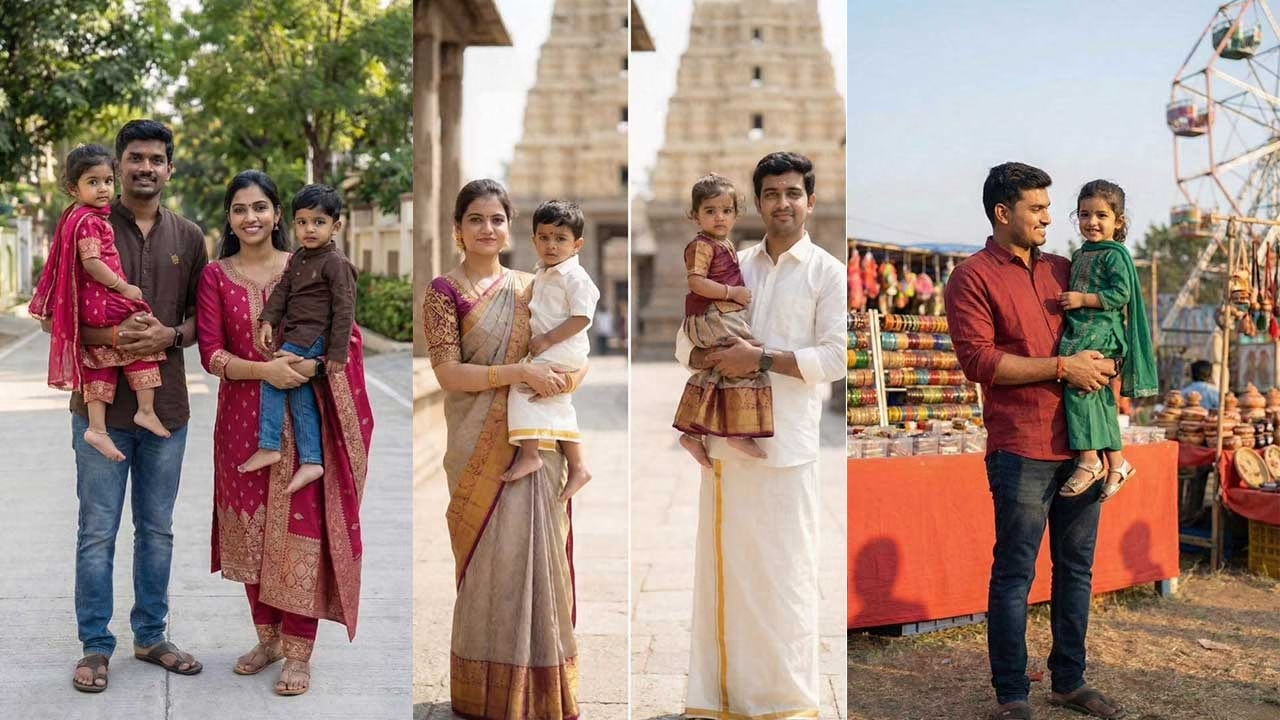
The idea often arrives quietly, without any technical intention behind it. It may come as a passing thought about how a family might look together, or a gentle wish to see a moment that exists only in imagination. AI makes it possible to give shape to such thoughts by creating a family image with a small baby that feels emotionally grounded, visually convincing, and deeply personal rather than artificial or staged.
Why AI Family Images Feel Emotionally Different
AI-generated family images are not accidental captures of a moment; they are deliberate emotional constructions. Every expression, pose, and interaction is shaped with intention. When a small baby is included, the image naturally carries warmth and vulnerability. This emotional layering is what makes AI family portraits feel different from ordinary images, even when viewers know they are digitally created.
How AI Interprets Family Relationships
Artificial intelligence does more than place people side by side. It interprets relational cues such as proximity, eye direction, body language, and facial softness. While generating a family image with a small baby, the system subtly adjusts features to suggest emotional bonding. This interpretation creates a sense of connection that makes the family appear naturally related rather than digitally assembled.
Understanding Baby Appearance and Age Representation
Representing a small baby accurately is one of the most delicate aspects of AI image generation. The system must balance facial softness, proportions, and expressions that align with a specific age. A three-year-old baby, for example, requires different visual cues than an infant. AI achieves this by referencing age-related patterns while maintaining realism and emotional consistency within the family image.
The Importance of Reference Image Quality
AI depends heavily on the clarity of reference images to generate realistic family portraits. Natural lighting, minimal shadows, and relaxed expressions allow the system to understand facial structure more accurately. When creating a family image with a small baby, balanced reference inputs help ensure the child appears naturally connected to both parents without exaggerated or mismatched features.
Emotional Reasons People Create AI Family Images
People turn to AI family image generation for deeply personal reasons. Some want to visualize a future family, while others wish to symbolically complete a moment that could not happen in real life. Including a small baby often represents hope, continuity, or emotional healing. These images are valued not for technical perfection, but for the meaning they carry.
Realism and the Shift Toward Natural Visuals
AI image generation has evolved significantly toward natural-looking results. Skin texture, lighting balance, and emotional expressions now closely resemble real photography. This realism is especially important for family images, where even small visual inconsistencies can disrupt emotional believability. Natural visuals help viewers emotionally accept the image as a meaningful representation.
Ethical Awareness and Personal Boundaries
Generating family images using AI also calls for thoughtful responsibility. Respecting privacy, consent, and emotional sensitivity is essential, especially when images involve children. Ethical use ensures that AI remains a creative and supportive tool rather than something that feels invasive. Responsible image creation strengthens trust and personal comfort with the final output.
Creative Freedom in AI Family Portraits
AI allows families to shape images according to their preferences, including setting, clothing, mood, and interaction style. This creative flexibility enables people to reflect cultural identity, lifestyle, or imagined scenarios in a natural way. A family image with a small baby can be created as a calm home scene, an outdoor moment, or a timeless portrait.
Prompts to Generate a Family Image With a Small Baby Using AI
This section is where the image truly takes direction. Prompts guide the AI in understanding roles, relationships, emotions, and physical interaction. Clear and emotionally descriptive prompts help ensure the baby appears naturally connected to the parents. You can place your own customized prompts under this heading to control how the family image is generated.
Sample AI Prompts
Boy Prompt:
Convert this image into mother and son combo. The girl has to be a mother and the boy has to be a son and son should be in same dress and same face like boy. The girl should hold him in her hand the age of the son should be 3 years baby boy.
Girl Prompt:
Convert this image into dad and daughter combo. The boy has to be a dad and the girl has to be a daughter and daughter should be in same dress and same face like girl. The boy should hold her in his hand the age of the daughter should be 3 years baby girl.
Family Prompt:
Convert this image into dad and daughter combo. The boy has to be a dad and the girl has to be a daughter and daughter should be in same dress. The boy should hold her in his hand the age of the daughter should be 3 years baby girl. mother and son combo. The girl has to be a mother and the boy has to be a son and son should be in same dress. boy in dad face and girl in mother face. The girl should hold him in her hand the age of the son should be 3 years baby boy. Combine as a family.
Cultural Expression in AI Family Images
Family imagery carries different meanings across cultures, and AI adapts effectively to these nuances. Traditional clothing, familiar environments, and culturally specific gestures can be reflected in the generated image. Including a small baby within these cultural elements enhances emotional authenticity and helps the image feel rooted in real-life identity rather than generic design.
A Visual Representation of Emotion and Imagination
AI-generated family images with a small baby are not meant to replace real photographs. They exist as emotional representations of thoughts, hopes, and imagined moments. These visuals allow people to see what they feel rather than what they have captured, turning inner imagination into a form that feels gentle, meaningful, and deeply human.